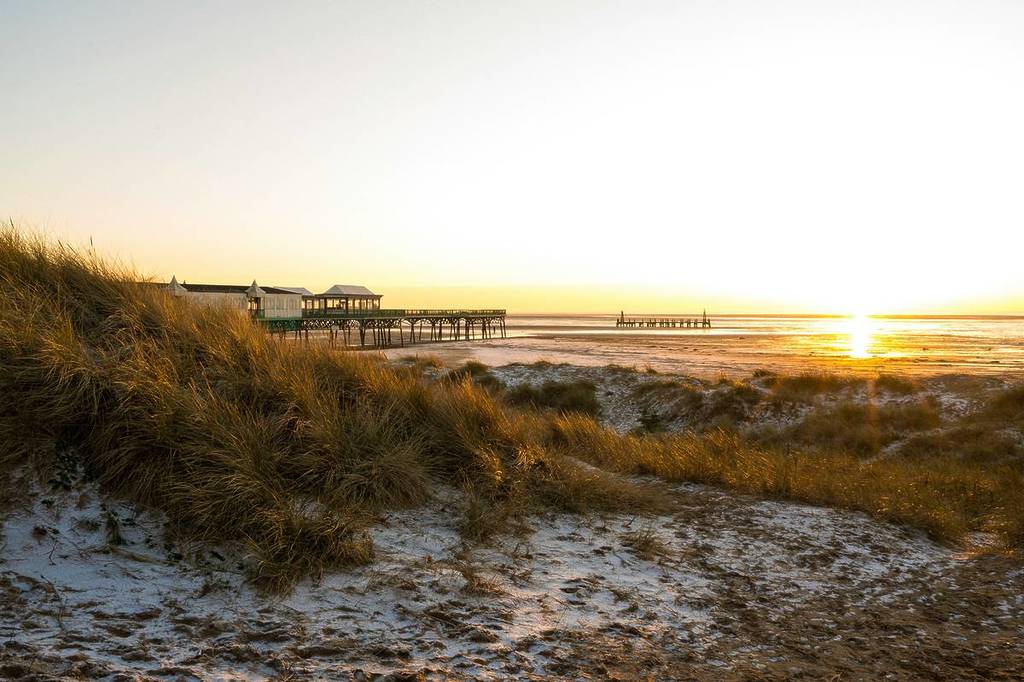
We’ve had some surprisingly beautiful weather this summer, and when the sun rears its head, you better believe we’re looking for a beach. Although Manchester is most definitely not on the coast, there are some gorgeous towns not too far away that boast a lovely promenade and British summer staples like fish and chips, Victorian piers and of course, ice cream, and one of the best is Lytham St Annes, just over an hour from Manchester.
Located on the Fylde coast, directly south of Blackpool on the Ribble Estuary, you’ll find the seaside town of Lytham St Annes. The dual seaside towns of Lytham and St Anne’s vary in both character and atmosphere and you’ll find them nestled along a picturesque stretch of coastline lined with well-tended lawns, a boating lake and pretty parks.
Lytham St Annes beach
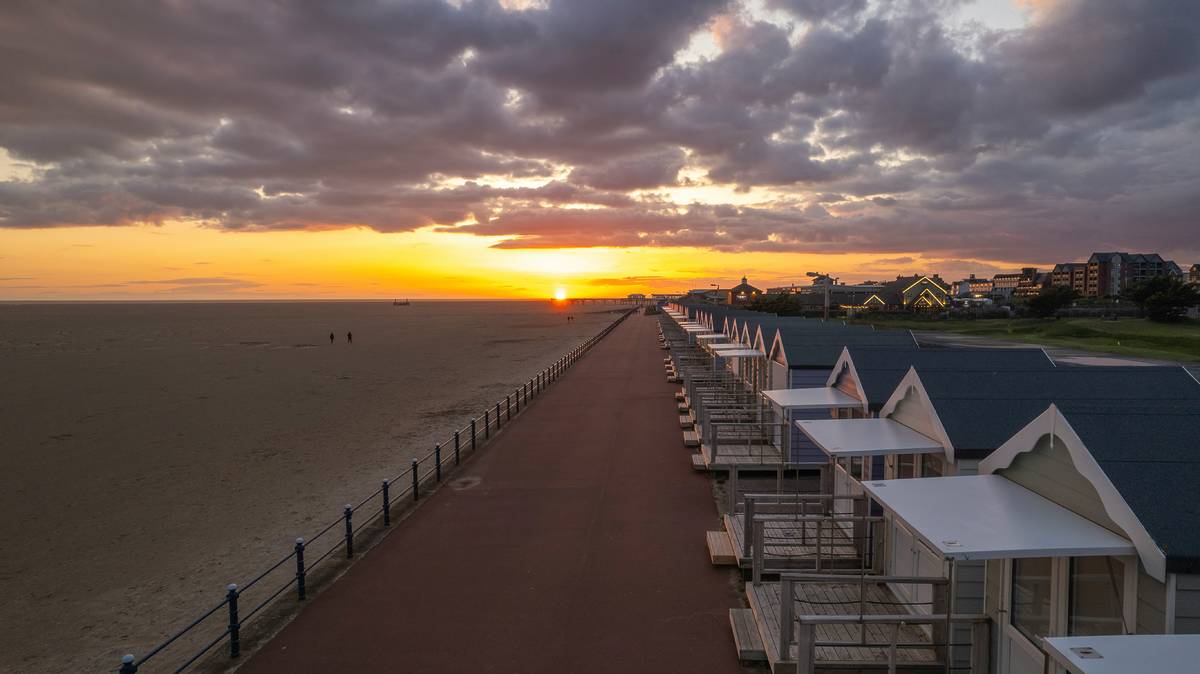
Lytham St Annes boasts an expansive sandy beach, making it a proper family place, ideal for all ages from toddlers to as old as you like. From food and drink – served in kiosks and cafes – to children’s amusements, pitch and putt golf, the pier, and even a little train, the beach at Lytham St Annes is more than just sunbathing.
Stretching from Starr Gate, at the boundary with Blackpool, to the Ribble Estuary at Lytham, the foreshore and beach at Lytham and St Anne’s is a considerable asset. Areas of the foreshore are also designated by English Nature as Sites of Specific Scientific Interest (SSSI), which brings considerable responsibility to manage the beach and foreshore in an ecologically sound and sustainable manner.
Award-winning beach huts
What makes Lytham St Annes stand out from other coastal towns near Manchester is its iconic (and award-winning) beach huts which are available to stay at, meaning you can cosy up watching stunning seaside sunsets or seek refuge on more blustery days.
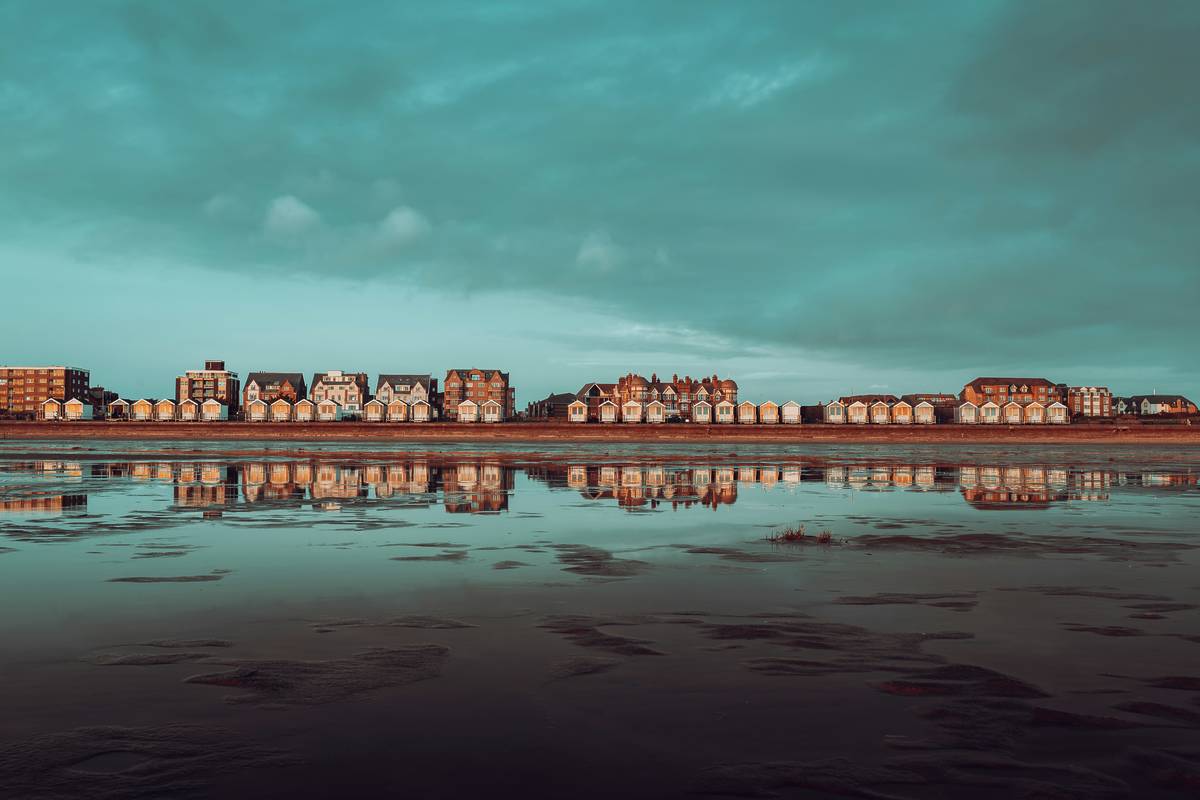
Beach huts have adorned the Fylde Coast for over a century, embodying the spirit and joy of British seaside culture. These iconic structures, originally mobile bathing machines, transitioned into permanent fixtures in the late 19th century, becoming beloved symbols of seaside charm in Lytham St Annes.
Victorian pier
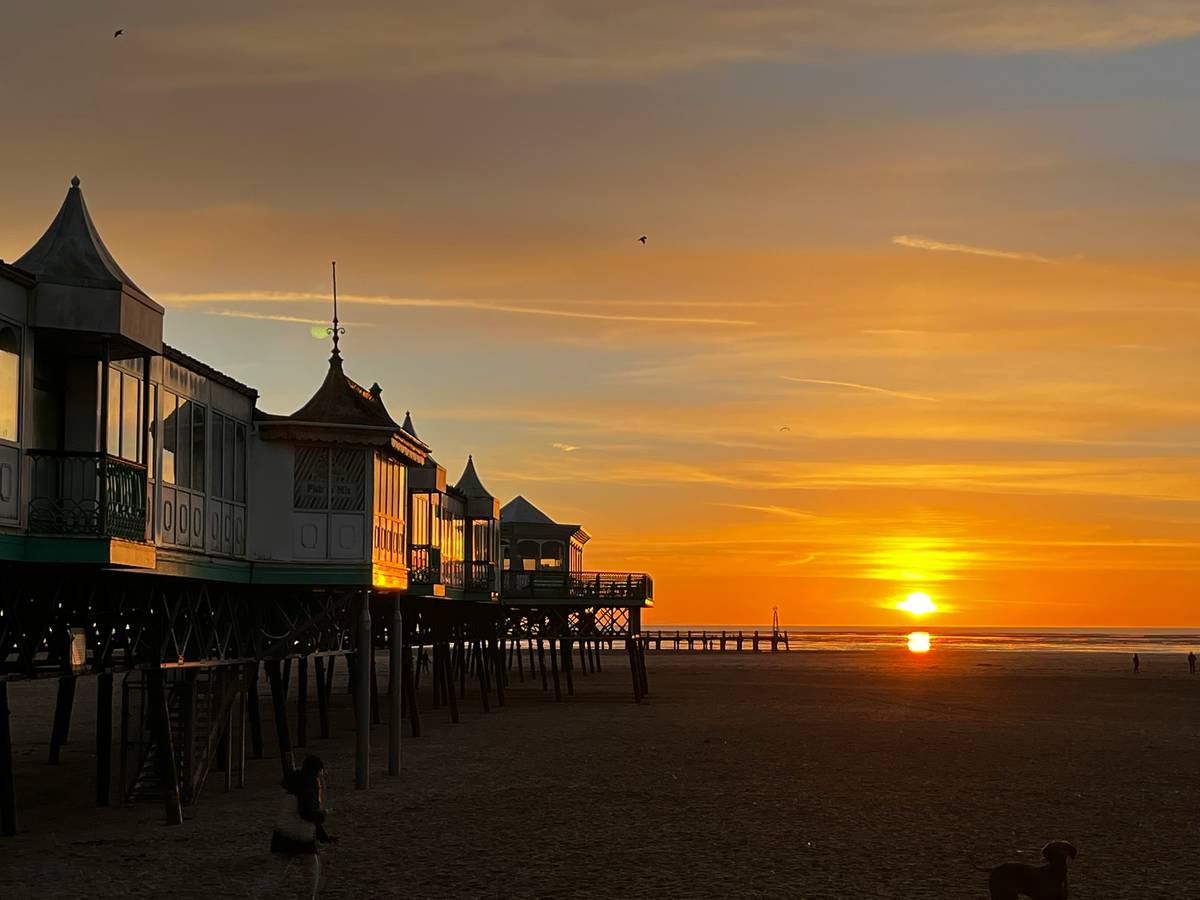
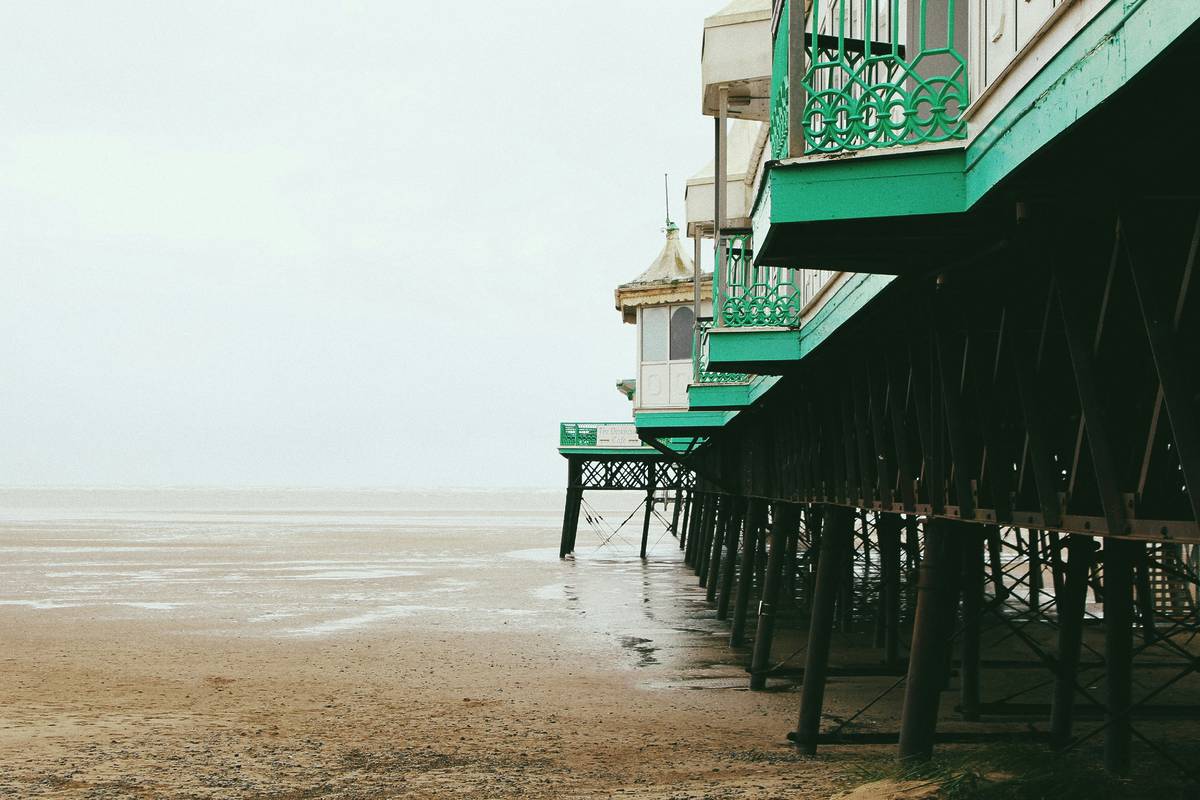
As you’d expect, Lytham St Annes pier was built in characteristic Victorian cast iron with a wooden deck and includes shelters and pavilions in cast iron, glass, and wood. It was originally opened to the public in 1885 at a cost of £18,000, and was one of the earliest public buildings in St Anne’s. In the early 1900s a Moorish style pavilion followed, then in 1910 the Floral Hall.
In 1954, the amusement arcade was added at the entrance of the pier, and close to the pier is an attractive bandstand, Victorian shelters, and the sea front gardens. In 1974 the Pier survived a major fire which caused serious damage to the hall – however, it was a second fire in 1982 which destroyed the Floral Hall.
The Pier was originally 914 feet long when it was built, but after the second fire half of the pier was demolished for safety. After demolition of the seaward end it was reduced to 600 feet – but you can still see the very end of it today, as the remains are a much photographed feature of the beach.
Historic windmill
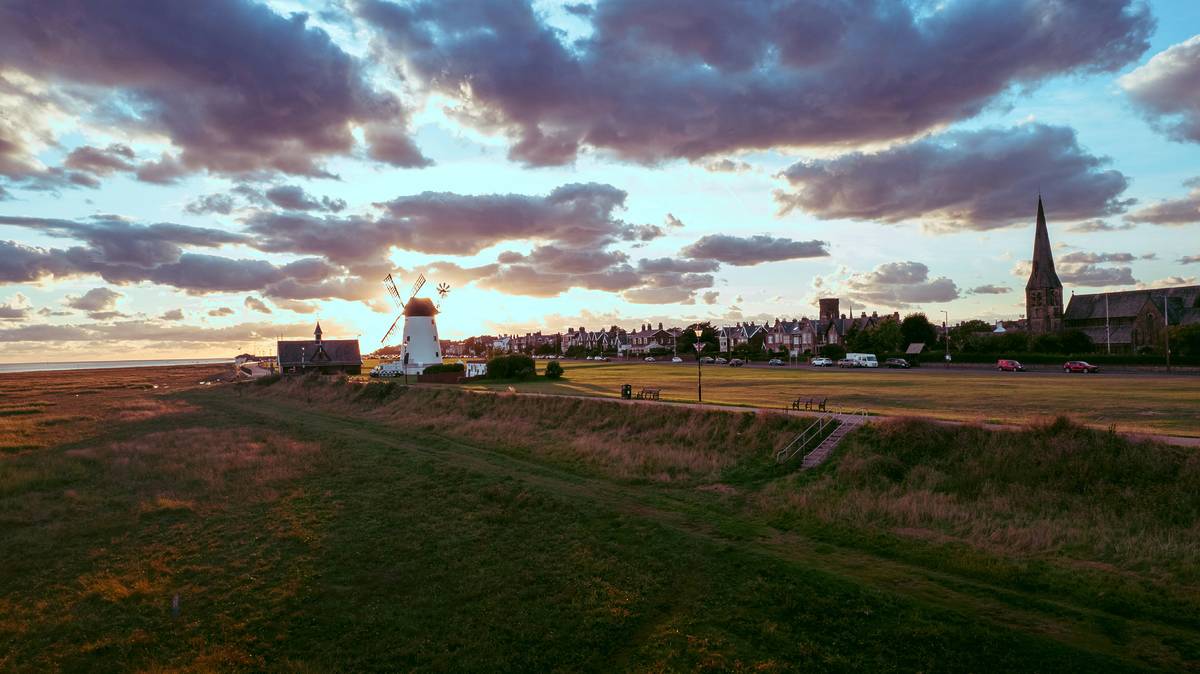
One landmark you’re bound to come across in Lytham St Annes is the historic windmill, located on Lytham Green, at the very south part of the coast of Lytham. Interestingly, windmills have featured in Lytham’s history for hundreds of years.
In 1805 Richard Cookson sought and obtained a lease from the Squire for a plot of land on which to build a ‘windy milne‘. Later, in 1860, when the prestigious houses in the area were being built the residents looked upon the Windmill as an “industrial nuisance”!

In January 1919, a tremendous gale turned the sails despite the powerful brake and sparks ignited the woodwork. The Windmill was quickly ravaged by fire, the interior being entirely gutted. The Windmill remained derelict until 1921, when it was given by the Squire to the Lytham Urban District Council. In 1989, the Windmill was restored by Fylde Borough Council and opened to the public.
Now, the Windmill and the Old Lifeboat House contain a seasonal museum with a series of exhibits focused on the ‘History of Mills and Milling’, the ‘Great Lifeboat Disaster’ and the ‘Heritage of Lytham St Annes and the Fylde Area’.
Royal Lytham & St Anne’s Golf Club
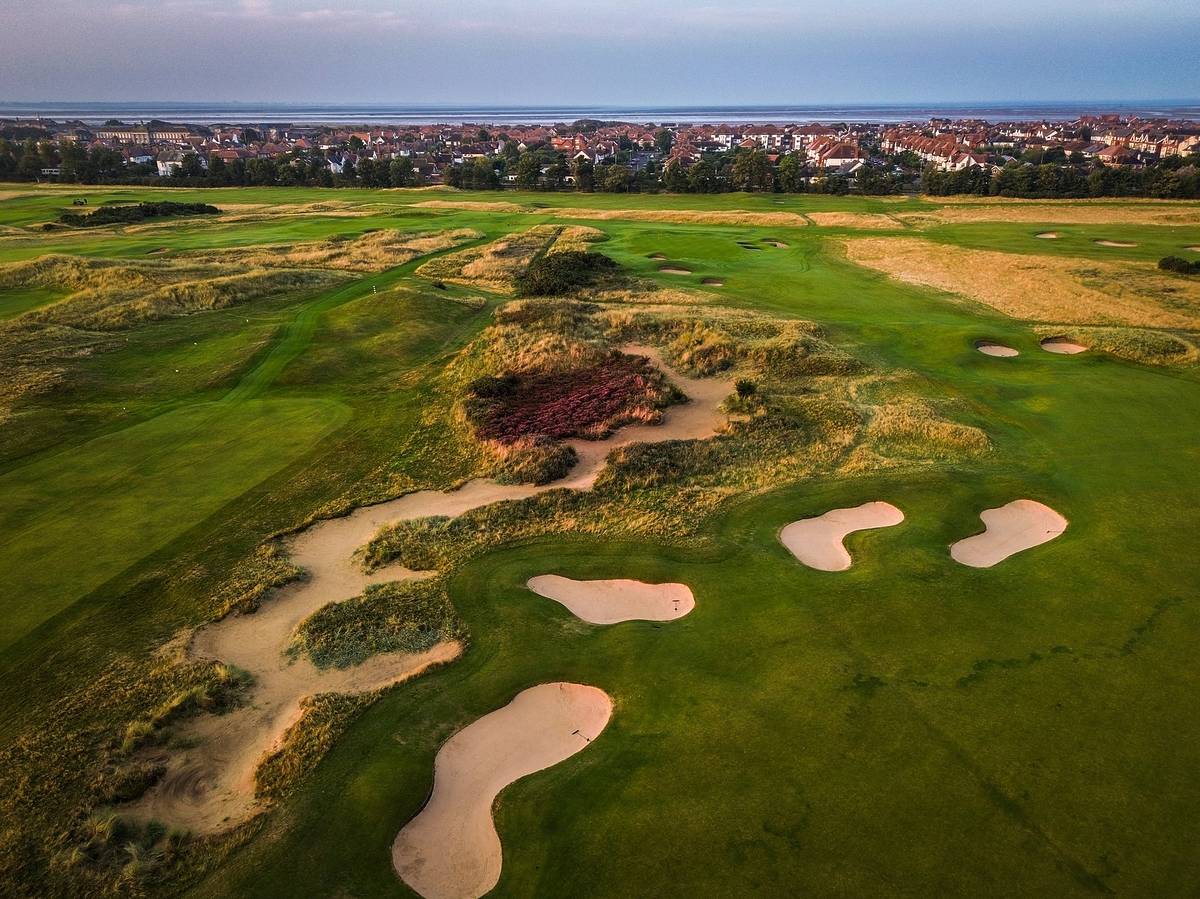
Royal Lytham & St Anne’s Golf Club is one of the premier links courses in the World, host to eleven Open Championships, two Ryder Cups and numerous other major tournaments including The Women’s Open, The Senior Open, The Amateur Championship and The Walker Cup.
Renowned as one of the best designed links courses in the world, the Course has a charm all of its own, flanked by a railway line and surrounded by suburban housing. It’s a Links Course that is away from the sea yet close enough for the sea breeze to have an effect on one’s game and was aptly described by Bernard Darwin, the leading golf writer of the thirties, as “a beast of a Course, but a just beast”.
Stylish independent shops
Renowned for its charity and vintage shops, Lytham St Annes is a haven for both pre-loved and boutique shoppers alike. There are also plenty of gift and homeware stores, satisfying that quaint town craving many of us have for trinkets and little bits, plus an array of food, drink and deli offerings. So whether you’re off to Lytham St Annes for a dip in the sea or just for a mooch around the shops, you’re bound to have a gorgeous day out.
How to get to Lytham St Annes
Lytham St Annes is around an hour and 15 minute drive from Manchester, taking the M61 and M55. There are a fair few places to park in Lytham St Annes including the North Promenade and St Annes Square car parks, with payment levels varying.
You can also get to Lytham St Annes in around an hour and 40 minutes, by taking the train from Manchester Piccadilly and changing at Preston to get to Lytham. You can then get the 11A bus to the specific area you need.
📍 Lytham St Annes, FY8.