
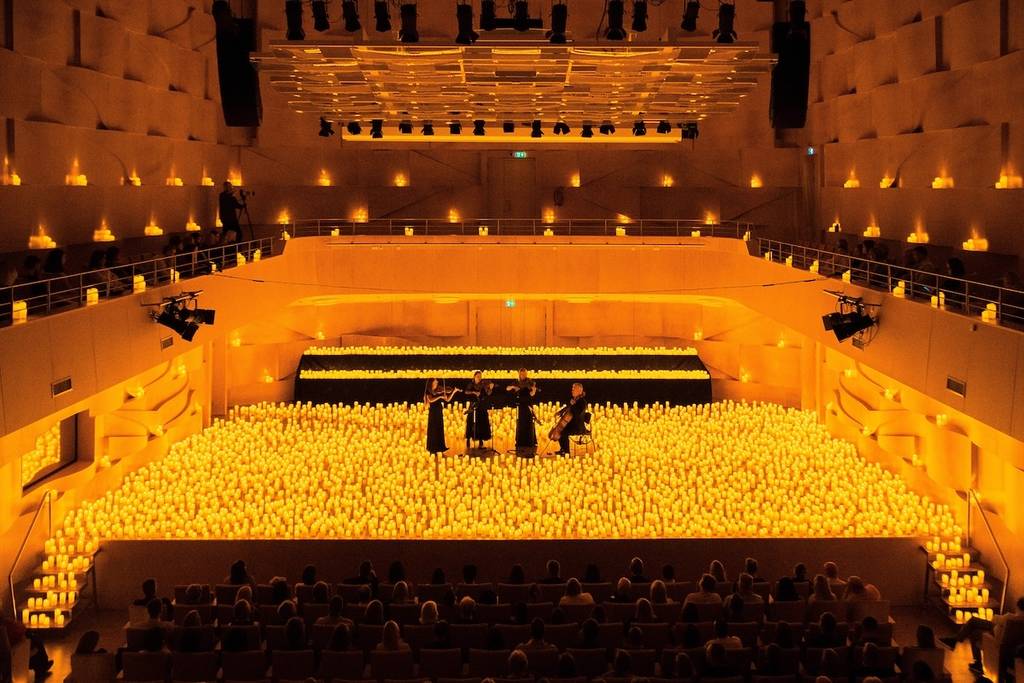
Manchester’s live music scene is legendary, from intimate gigs in the Northern Quarter’s independent venues to arenas selling out some of the world’s biggest names, but Candlelight concerts in Manchester offer something entirely different. Many know the allure of these concerts, as string quartets perform in some of the city’s most atmospheric venues, surrounded by thousands of flickering candles, transforming familiar songs into something quietly powerful.
But while audiences in Manchester experience the magic, very few know who is behind it.
We spoke with the Curation Team, the division responsible for making music in Fever happen, to find out what keeps the wheels of the globally loved concert series turning, and how those masterfully crafted setlists make their way to stages across the city.
“The Curation team is the heart of all the music-related projects of Fever, we’re the ones that are silently taking care that the most important part of every concert is executed greatly.”
The experts who are behind every concert
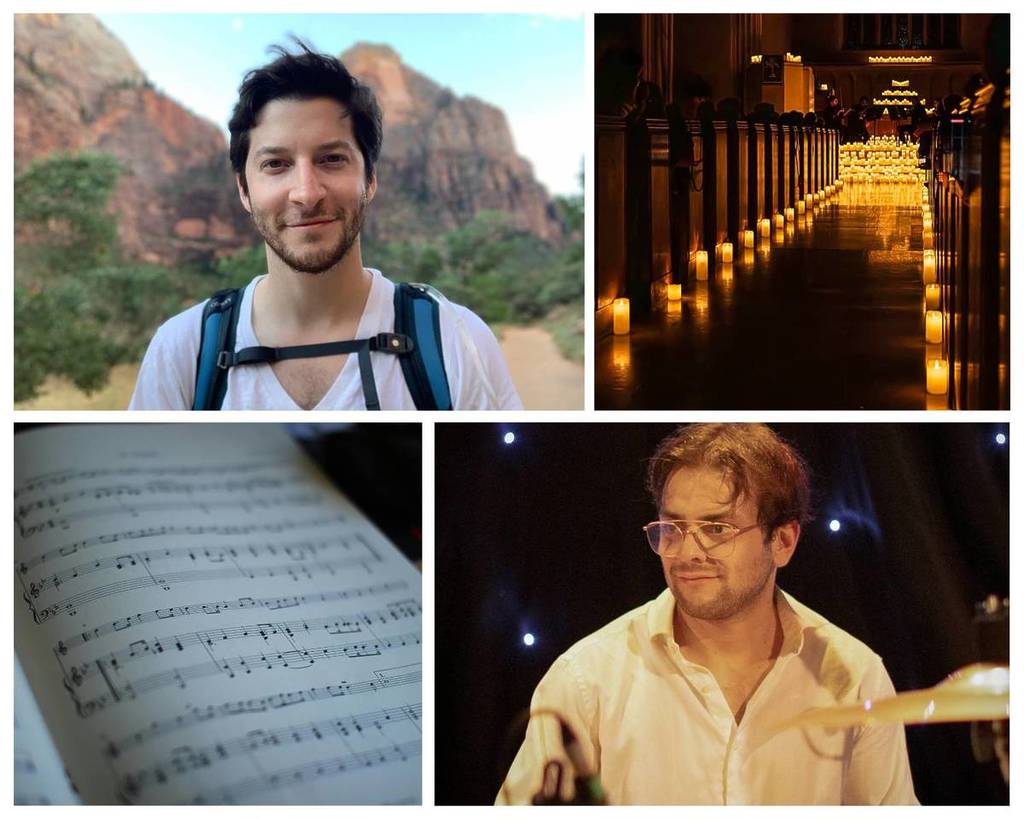
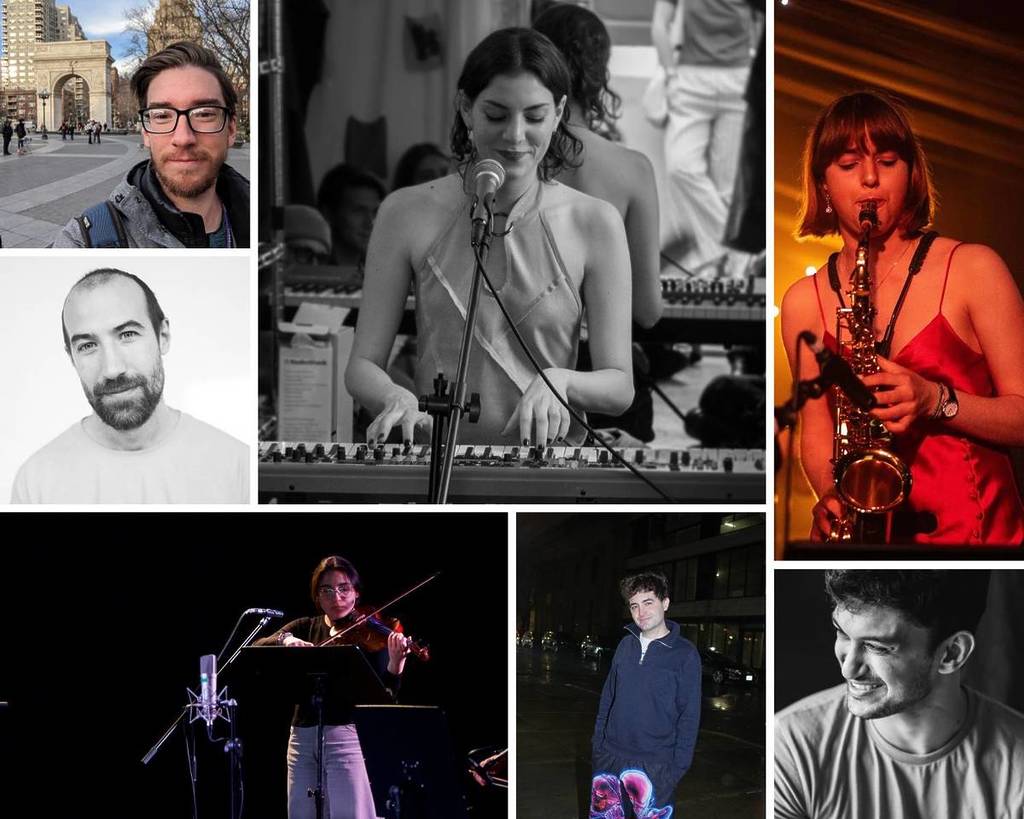
Behind every Candlelight concert is a team most audiences never see, but whose fingerprints are all over the experience. Fever’s global curation team is made up of 15 music professionals based across Europe, the Americas, APAC, India, and beyond. They include performers, researchers and academics with backgrounds spanning classical music, jazz, composition, and musicology. More than qualified for the role, among them are people with PhDs, master’s degrees in music philosophy and aesthetics, and even a former Broadway actor.
“This group has its own superpowers—we’re a mix of musicians and business people, but we all have that common denominator of knowing our craft inside out.”
While Candlelight may feel seamless from the audience’s point of view, that polish comes from an intensely human process. Pablo, Lulu, Ricky, Aalok, Hynumin, Paula González, Tyler, Andy, Javi, Adrian, German, Ross, Paula Flores and Ana make the team with the technical knowledge that understands what will work artistically and what will translate beautifully to a live string quartet or piano performance.
The quality control, scouting, curation and translation that goes into a Candlelight concert
A huge part of the role is acting as a kind of musical quality filter. Every arrangement, every performance standard and every programming decision passes through curators who know exactly what they are listening for. They are also talent scouts, with one curator describing the job as requiring “the research skills of a private investigator”, as the team searching everywhere from archives to Instagram, YouTube and local music networks to find standout musicians in each market.
Then there’s the less glamorous but equally important side of the job: being the bridge between art and operations. Curators often have to translate the language of business into something meaningful for artists, while also advocating internally for the musicians who bring Candlelight to life. It is a balancing act between creativity, logistics, budgets and high standards.
A global team with local knowledge
Although the team and concert series are international, Candlelight’s curation is not one-size-fits-all. Each region has a dedicated curator with local insight, helping programmes feel relevant to the audiences they are created for. That matters in a city like Manchester, where live music culture is deeply embedded in our local identity and history. Curators look at listening habits, cultural context and audience expectations in different regions, rather than relying on raw streaming data alone.
“A curator’s job is to look beyond the charts and find the ‘local soul’ of a city, making sure a program in Mumbai feels as authentic as one in London or New York.”
That’s what makes the programme so varied and relevant at the same time, so one night you might find yourself immersed in Vivaldi’s Four Seasons, and the next, hearing the unmistakable songs of Oasis. One curator explained that local expertise is essential because you cannot “only rely on data” when trying to understand what will truly resonate in a particular place. That human judgement also shapes the flow of a programme, balancing the biggest crowd-pleasers with deeper cuts, emotional pacing and songs that genuinely work in a classical format.
Why AI will never replace the human filter

In an era shaped by algorithms, the Candlelight curation team are clear in their stance that creativity cannot be automated.
“Whatever AI spits out is not half as good as what I can come up with through my years of training,” one curator says. Another is even more direct: “I don’t think a machine will ever be able to create more than a hollow pastiche of art.”
For the team, the issue is not just about quality, but philosophy and morality. “Music is a living, breathing thing created by living, breathing artists, and it would be incredibly disrespectful to relegate the best part of the job to an algorithm.” While technology can support research or organisation, it cannot replace what they call the “human filter”, that is, the instinct and experience needed to understand why one piece resonates deeply, while another falls flat.
Long before algorithms, music was shaped by human hands and shared in places like Manchester Cathedral, Hallé St Peter’s and St Philip’s Church. And long after trends, data and technology evolve, it will continue to live on the same way, through musicians, audiences, and the quiet, unspeakable, connection between them.
With thanks to Candlelight’s Curation Team who we interviewed for this article: Pablo Moreno Sánchez, Robert Tyler Bechtle, Javier Calderari Torres, Ricky Schweitzer, Ana Sofía Vela Ramirez, Andree-Ann Deschenes, Hyunmin Kang, German Ocampo Barrera, Adrian Martens, Paula Gonzalez, Paula Flores, Lulu Whittington, Ross Raymond Mccaw and Aalok Gandhi