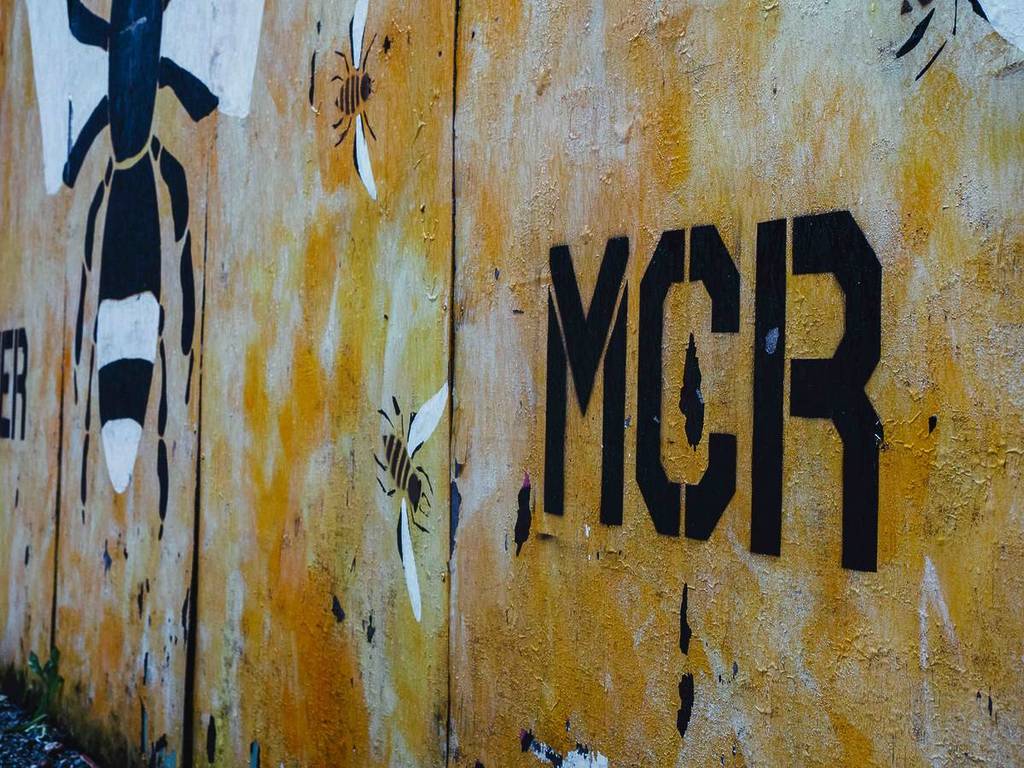

Whether you’re new to Manchester or just haven’t been paying attention (seriously, where have you beeeeen?), it’s impossible to wander the city without noticing its famous worker bees. Proudly emblazoned on everything from bins and brick walls to street signs and mosaic floors, these iconic little symbols are completely unmissable once you know to look.
Why is the bee the symbol of Manchester?
The worker bee perfectly captures the industrious spirit of Manchester. The connection dates back to the 18th and 19th centuries during the height of the Industrial Revolution, when the city was a thriving technological hub famously dubbed ‘Cottonopolis’. The Mancunian factories were also sometimes referred to as ‘beehives’ because the workers within them were so occupied and productive, like ‘busy bees’.
By 1842, the bee was officially added to the Manchester coat of arms, featuring a globe surrounded by seven bees to represent the city’s global trade. In more recent years, particularly following the tragic Manchester Arena attack in May 2017, the bee has taken on an even deeper meaning, standing as a powerful symbol of resilience, unity, and civic pride.

Why a worker bee?
The difference between a worker bee and a queen bee in insect terms is that a queen bee is bigger (roughly twice the size) and has the sole responsibility of laying eggs and ensuring the survival of the colony. However, worker bees carry out every other task needed in the colony- essentially, they do all the work!
Manchester’s bee is a worker bee to reflect a city made by workers; made by the people, not a city that has grown from royal patronage or easy natural resources. Like worker bees, Mancunians are industrious little grafters who together create an impressive force (or powerhouse) to make the city (or hive) thrive.
Where can I spot bees in Manchester?
There are several spots in Manchester where you can see Manchester’s bee symbol on display. Although currently undergoing a large refurbishment, Manchester Town Hall proudly showcases a coat of arms on its exterior, and you can see lots of references to cotton, Manchester’s prime industry back in the day, and the city’s equivalent of honey.
More bees can be found at Spring Gardens, as well as some hidden from view at Deansgate tram stop, Principal Hotel, Cathedral Gardens, Manchester Cathedral, and randomly an ice box at Piccadilly Place. Not forgetting there is Beehive Mill in Ancoats, and St Ann’s Square, which has oversized 1980s bees opposite the Royal Exchange.
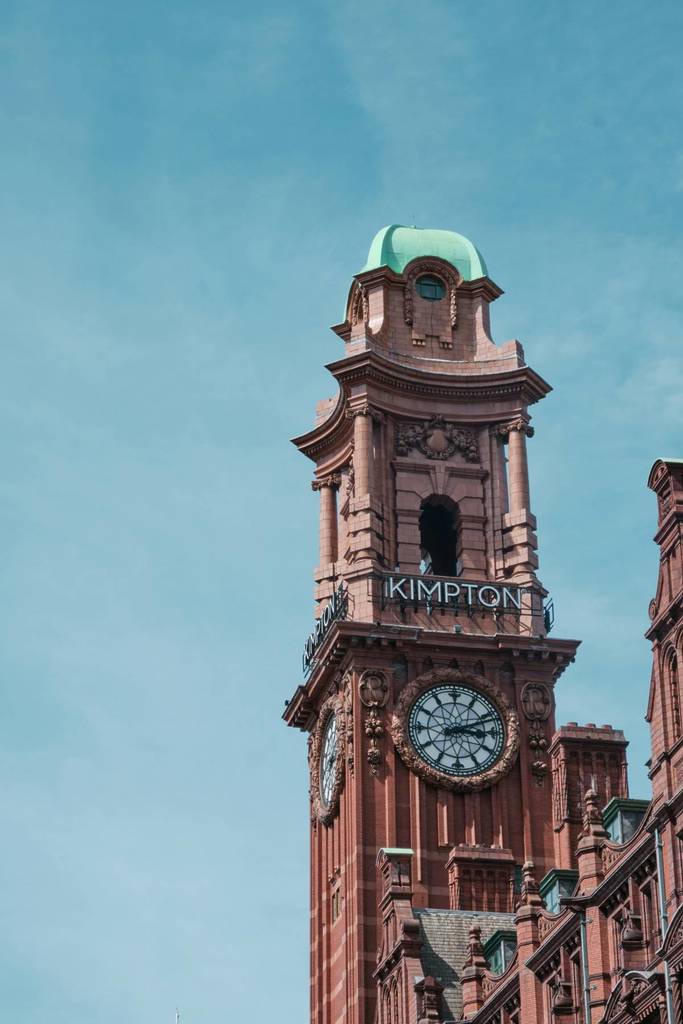
Take a stroll down to the Kimpton Clocktower on Oxford Road and be sure to look up, as on the clock face, there are bees telling the quarter hours. Plus, the University of Manchester also has three large bee symbols on its coat of arms.
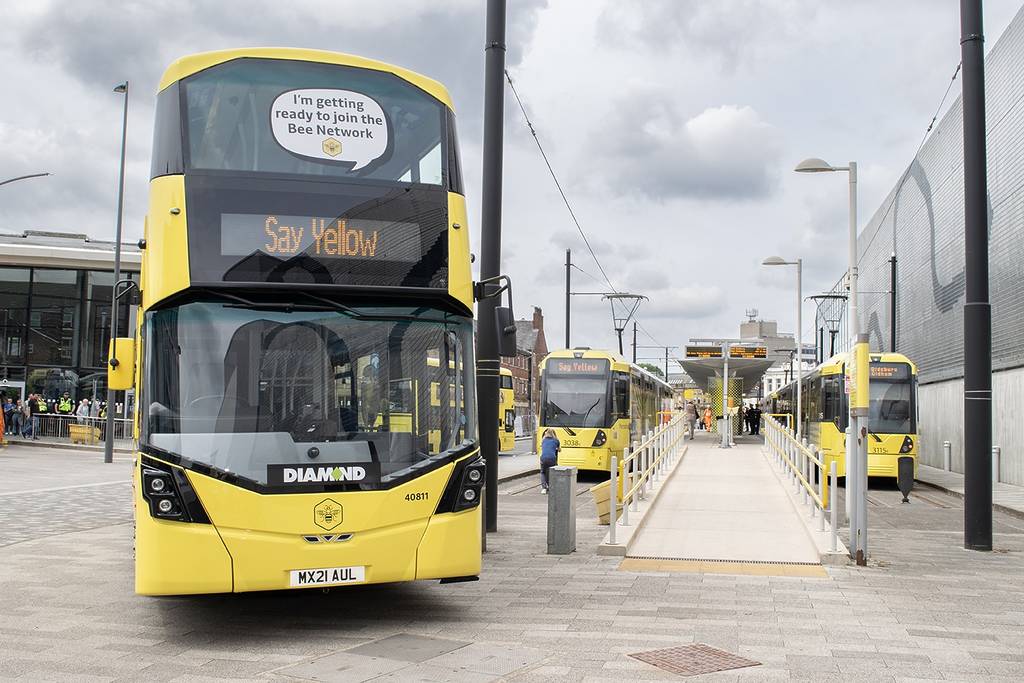
More recently, Transport for Greater Manchester (TfGM) introduced the Bee Network, a simplified, integrated and cheaper fare structure and the region’s plan for a ‘London-style’, high volume, low fare, transport system. The scheme, which launched in September 2023, links buses and trams together, and the city-region is the first area to bring buses under local control for the first time in almost 40 years, rolling out bright yellow buses donning the bee symbol.

What are the bee sculptures in Manchester?
Part of the Bee in the City trail back in 2018, they paid homage to famous elements of Manchester’s history with more than 100 sculptures of the iconic worker bee, which symbolised the city’s energy and sense of community since the Industrial Revolution. The super-sized sculptures, which were sponsored by local businesses, feature designs by Manchester-based artists that reflect the city, from music legends to the cobbles of Coronation Street.
Displayed across streets, parks, and public spaces throughout Manchester, including a Stone Roses inspired ‘I Wanna ‘Bee’ Adored’ bee and one paying tribute to 90s Madchester ‘Hac ‘Bee’ Enda’, with some still located in the city now. The Original Worker Bee is located in the Central Library Foyer, the Sylvia Bee (painted in homage to suffragette Sylvia Pankhurst) is located on the concourse inside Manchester Victoria Station, the LGBTQ+ Queen Bee can be found in Sackville Gardens, and the Love Bee sits proudly at Manchester Cathedral.

But are there any real bees in Manchester?
With the Industrial Revolution came air pollution, so the city is aiming to bring more bees back. Dotted around the city are some beehives, including one on top of Manchester Cathedral, the Printworks, Manchester Art Gallery, Manchester Central conference centre, and even on some commercial buildings around the city.