
Manchester has no shortage of landmark pubs, but few are as instantly recognisable or as gorgeously preserved as this pub.
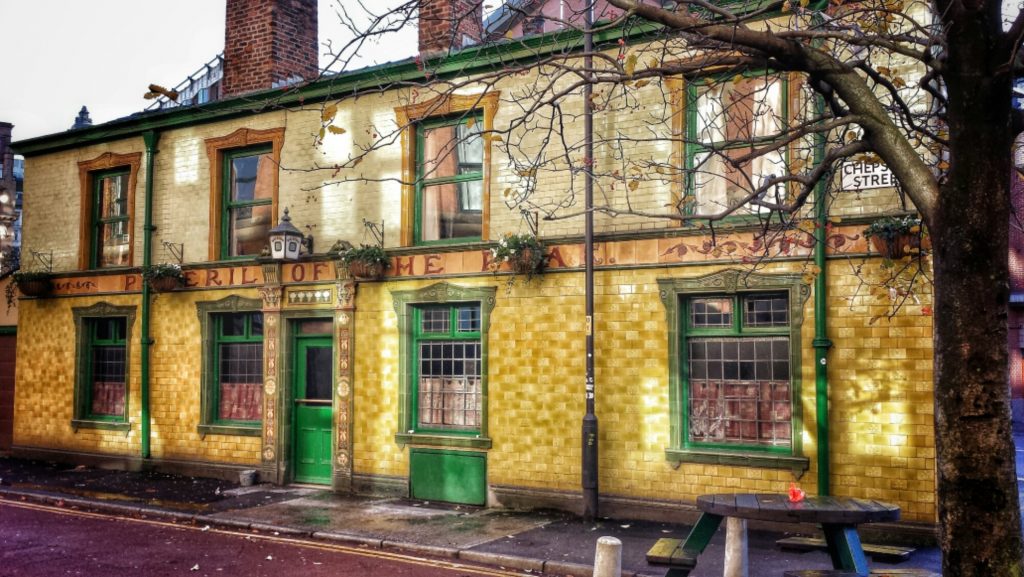
Tucked into Great Bridgewater Street, this Grade II-listed pub is famed for its green tiled exterior, but the real magic happens inside, where original Victorian details, stained glass, snug rooms and polished wood create one of the city’s most atmospheric interiors.
One of Manchester’s most beautiful pubs
Built around 1820 and remodelled around 1900, the Peveril of the Peak is a rare survivor in a part of the city transformed by modern development.
Despite its central location near the Bridgewater Hall, the pub still feels like a time capsule, with CAMRA describing its interior as being of “outstanding national historic importance.”
A Victorian pub hidden in plain sight
Step inside and you’ll find a pub arranged in a traditional multi-room layout rather than one open-plan space.
There’s a long, twisting drinking lobby, a public bar, a cosy snug and a rear room, each with its own character and old-fashioned details that reward a slow look around.
What makes the interior so special is how much of the original fabric survives. The pub features fixed bench seating, bell pushes, timber-and-glass screens, tilework, and an ornate fireplace in the snug, all of which help preserve the feel of a late Victorian neighbourhood local.
A Grade II-listed pub with a heritage interior that has earned strong praise from CAMRA and other pub historians.
The pub’s interior is especially admired for its decorative surfaces. The entrance areas are lined with green and cream tiles, while the serving screens and partitions include stained glass with flowing Art Nouveau-style designs that fit the period beautifully.
Even later additions have been handled with care. CAMRA notes that a stained glass feature above the bar, added in the 1980s, was made to match the earlier decorative panels, which helps the pub maintain its cohesive historic look.
Part of the Peveril’s appeal is that it feels both grand and intimate. The wedge-shaped building creates unusual room shapes, but instead of feeling awkward, they give the pub its distinctive rhythm and charm.
Visitors can move from the bar corridor to the snug or rear lounge and feel like they’ve wandered through several different chapters of the same story.
That atmosphere is one reason the pub remains such a beloved Manchester institution. It has long been associated with traditional pub culture, and its preserved interior gives it a rare authenticity that stands out even in a city with plenty of historic drinking spots.