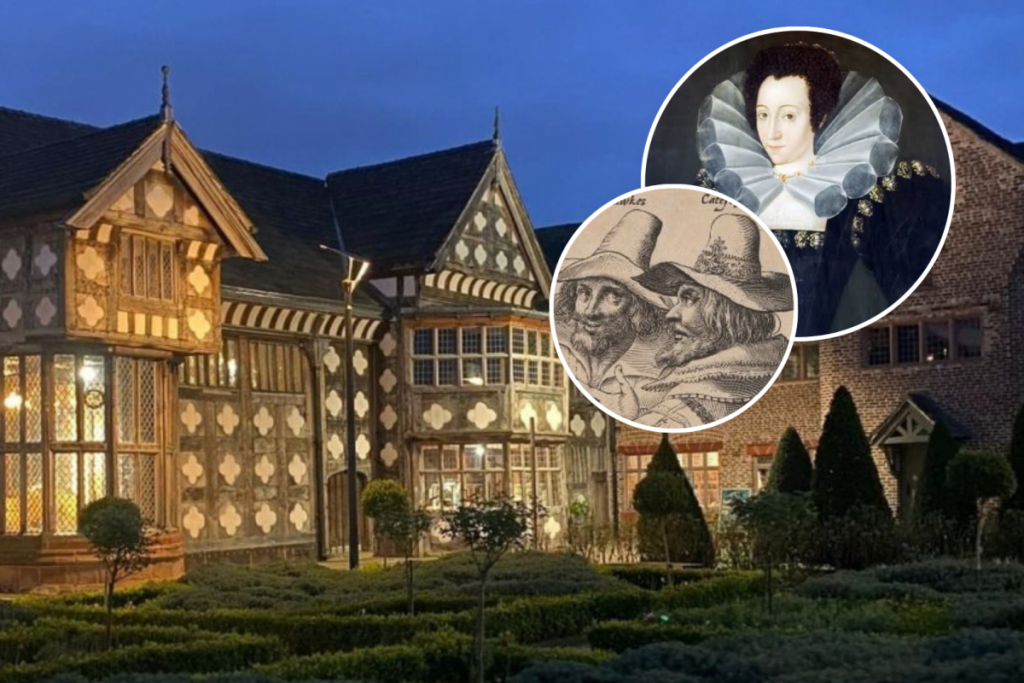
NPG 334a/National Portrait Gallery, London. Licensed for reuse under this Creative Commons license.

Amidst the modern high-rises and arterial roads of Salford stands an improbable survivor of the Elizabethan age: Ordsall Hall. With its striking black-and-white timber framing, soaring Great Hall, and centuries-old oak beams, this Grade I listed manor house has anchored the banks of the River Irwell for over eight centuries.
Yet beneath its architectural splendour lies a shadowier legacy. Ordsall Hall is widely regarded as Greater Manchester’s most famous haunted location, a reputation forged at the turn of the seventeenth century through two intertwined late-Tudor narratives: the tragic heartbreak of Lady Margaret Radclyffe and the whispering shadows of the Gunpowder Plot.
The heartbreak of Lady Margaret: Birth of the White Lady

For over three hundred years, Ordsall Hall was the ancestral seat of the Radclyffe family, prominent Lancashire gentry whose influence extended deep into the Tudor court. Among the most celebrated of the clan was Margaret Radclyffe (1575–1599), twin sister to Sir Alexander Radclyffe. Renowned for her wit and beauty, Margaret left Salford for the royal court in London, where Queen Elizabeth I appointed her as one of her cherished Maids of Honour.
The golden light of court life was shattered in 1599 during the Nine Years’ War in Ireland. Sir Alexander was killed in action at the Battle of Curlew Pass. Overcome with grief for her twin brother, Margaret fell into a profound melancholy, refusing food and fading rapidly. She died at court on November 10, 1599.
Contemporary physicians recorded her cause of death as “strings around the heart“—a historic diagnosis for a broken heart. Her death so touched Queen Elizabeth that the monarch ordered Margaret buried with the honours of a nobleman’s daughter and commissioned the playwright Ben Jonson to compose a poetic epitaph for her grave.
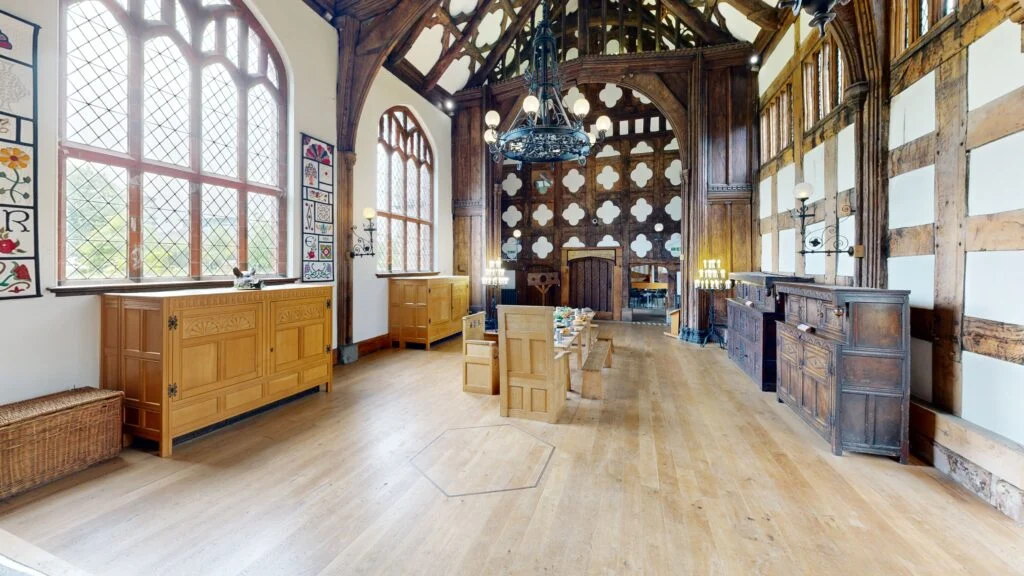
Though Margaret was laid to rest in London, legend insists her spirit returned home to Salford. For centuries, visitors, caretakers, and ghost hunters have reported sightings of the White Lady—a pale, ethereal figure drifting silently across the Minstrels’ Gallery, traversing the Great Hall, or standing vigil in the Star Chamber. She is often described carrying a flickering candle or searching through empty corridors, forever mourning the brother who never returned from war.
Whispers in the Star Chamber: The Gunpowder conspiracies

NPG 334a/National Portrait Gallery, London. Licensed for reuse under this Creative Commons license.
While Margaret’s ghostly presence imbues Ordsall Hall with sorrow, its political folklore paints a picture of perilous intrigue. As devout Roman Catholics during an era of fierce religious persecution under Elizabeth I and James I, the Radclyffes lived under constant state surveillance.
Catholic households in the north of England were vital hubs in the underground network that harbored outlawed priests and plotted the restoration of the Old Faith.
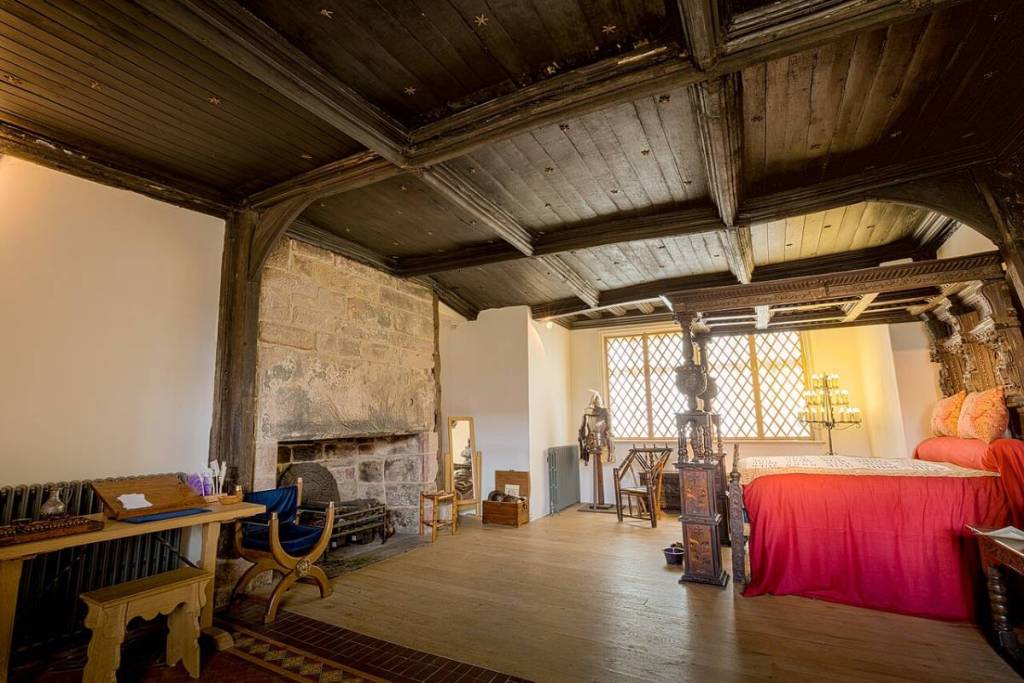
Local tradition links Ordsall Hall directly to the Gunpowder Plot of 1605. According to persistent folklore, key conspirators—including Robert Catesby and Guy Fawkes—met in secret at Ordsall Hall to hatch their treasonous scheme to blow up the Houses of Parliament. The house’s intimate Star Chamber, with its ancient painted ceiling beams and hidden architectural pockets, is traditionally cited as the room where the plotters gathered in hushed tones away from parliamentary spies.
Enhancing the mystery is the long-held belief in a secret subterranean tunnel running from the cellars beneath Ordsall Hall, under the River Irwell, and emerging near Manchester’s Hanging Bridge—a passageway allegedly built for priests and plotters to escape royal forces.
This explosive history was forever etched into popular imagination by Victorian novelist William Harrison Ainsworth in his 1841 historical romance Guy Fawkes. Ainsworth positioned Ordsall Hall as the central backdrop for the conspiracy, inventing the character of Viviana Radclyffe, a heroic daughter of the hall who fell in love with Fawkes.
While modern historians view direct evidence of Fawkes’ physical presence as unproven folklore, the Radclyffes’ known acquaintance with the Catesby family and their shared Catholic cause give the story deep historical plausibility. Salford itself embraced the myth, naming the thoroughfare alongside the hall Guy Fawkes Street.
Where history meets the supernatural

The convergence of historical tragedy and conspiracy has transformed Ordsall Hall into an archetype of Northern Gothic folklore. The manor’s modern hauntings are not limited to Lady Margaret alone; supernatural encounters reported by staff and paranormal investigators range from unexplained scents of Tudor roses in empty rooms to the sound of children’s footsteps echoing near the oak staircases.
Today, as a preserved historic house museum surrounded by Salford’s urban landscape, Ordsall Hall stands as a bridge between documented history and ghostlore. Whether viewed through the lens of archival record or spectral tradition, the lost life of Lady Margaret Radclyffe and the dangerous political undercurrents of the late-Tudor era remain etched into the very timbers of the hall.
📍Find Ordsall Hall at 322 Ordsall Ln, Salford M5 3AN.