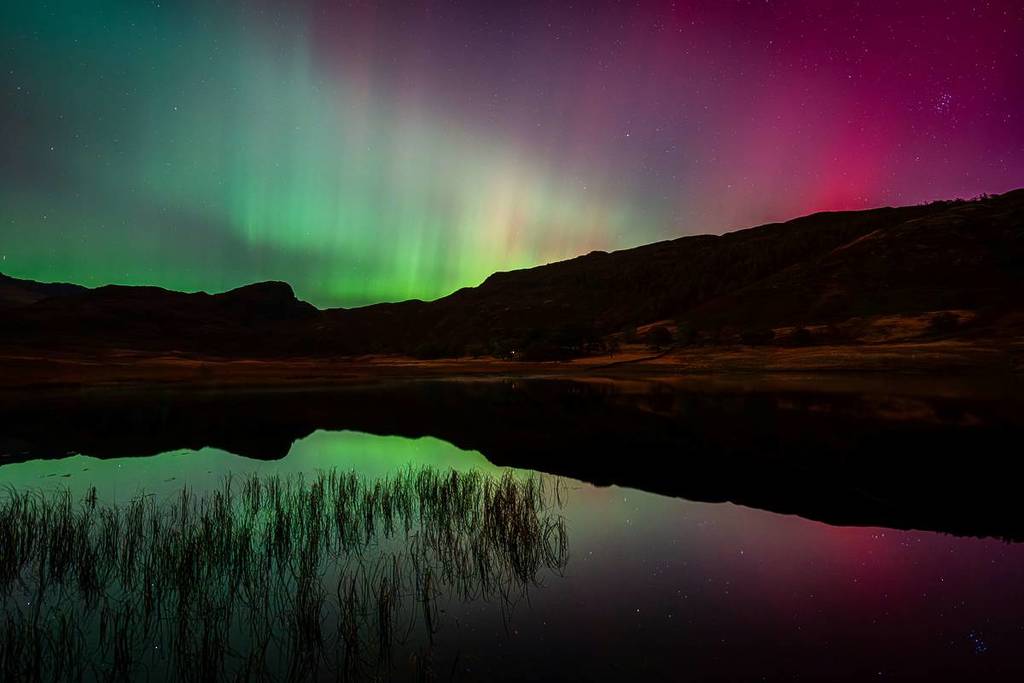
Following a Coronal Mass Ejection (CME) that hit Earth on January 19, the UK has been treated to some spectacular aurora displays. However, the show isn’t over yet, as tonight (January 20) offers another chance to spot the Northern Lights as far south as Manchester and Northern England.
Here’s when the Northern Lights could be visible from Manchester
Since the Met Office predicts the storm will wind down by Wednesday, tonight (January 20) is likely your last good chance to see them. The sun will set in Manchester at 16:28, so get ready early. It might be a bit cloudy in town, so if you’re serious about seeing them, consider driving out to a darker spot away from the city lights.
The Met Office said: “A Coronal Mass Ejection (CME) that departed the Sun on 18 January reached Earth on the evening of 19 January UTC. G4/Severe geomagnetic storms were observed, producing widespread auroras visible across the UK, with reports extending as far south as northern Italy. By the evening of 20 January UTC, auroral activity is expected to decline, though it may still be visible in parts of Scotland, Northern Ireland, and other similar latitudes with clear skies. Auroras are then forecast to return to background levels for the remainder of the period.”
Aurora Watch UK based at Lancaster University has also recorded a red alert for geomagnetic activity for this evening.

Krista Hammond, space weather manager at the Met Office, said: “The CME is likely to result in geomagnetic storming, giving the potential to view the aurora. However, sightings are dependent on the CME arriving during hours of darkness and clear skies.”
“The effects of the CME may linger into Tuesday night, with aurora sightings possible across Scotland, perhaps also Northern Ireland and northern England, where skies are clear. This is likely to wane further by Wednesday night, perhaps with some glimpses possible from the far north of Scotland.”
What is a coronal mass ejection?
According to the Met Office, a coronal mass ejection is “an ejection of material from the sun’s surface into interplanetary space. If the material is directed towards the Earth, the event may result in a geomagnetic storm”. A geomagnetic storm is “a temporary disturbance in the Earth’s magnetosphere”, which is brought on by solar wind.
Where to see the Northern Lights in Manchester
For the best chance of witnessing the aurora, watchers must go to a dark area. Elevated parks and hills work well for city areas; however, travelling to the countryside can boost one’s chances of seeing the Northern Lights even more. As always, do check the weather forecast before heading out, as travelling further afield might prove more fruitful!