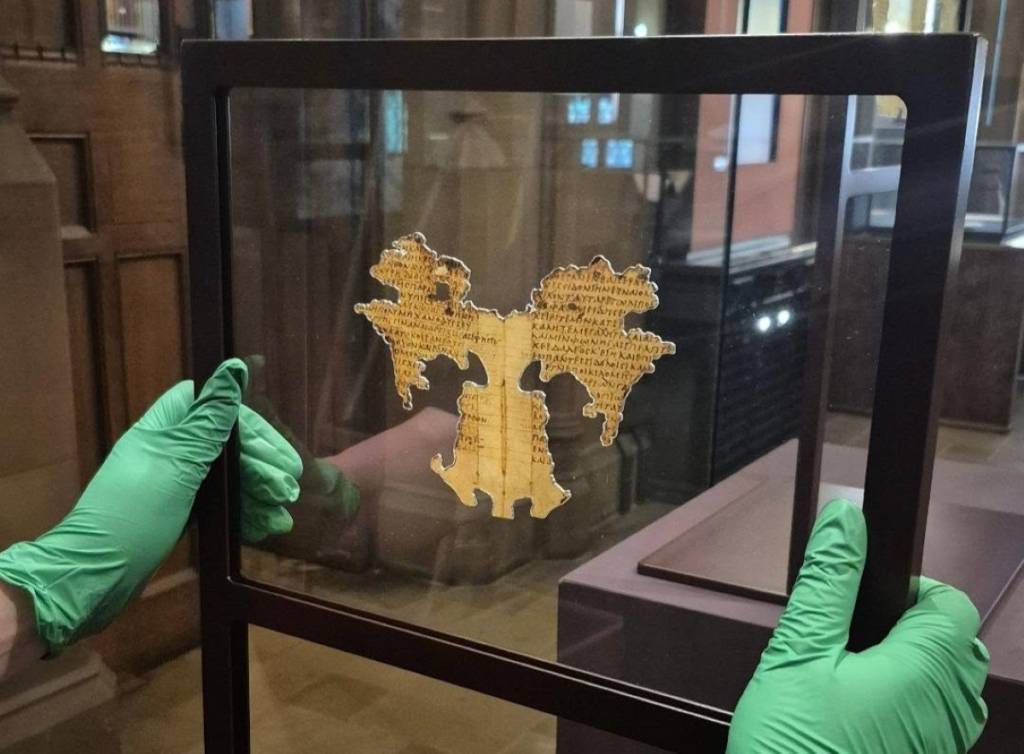

For more than two millennia, Homer’s Odyssey has shaped how we think about wandering, homecoming, and the profound cost of survival. But Odysseus is not the only survivor of this tale. In line with Christopher Nolan’s epic adaptation of the ancient text, Manchester is getting in on the action with a special display at John Rylands Library.
The Manchester Odyssey—a rare, 1,700-year-old parchment manuscript—has survived its own epic journey. Copied in Egypt during the 3rd century CE, it brings us as close to the dawn of Homer’s written epic as physically possible.
Today, housed at The John Rylands Research Institute and Library, this remarkable artefact is entering a new chapter of conservation, research, and public display.
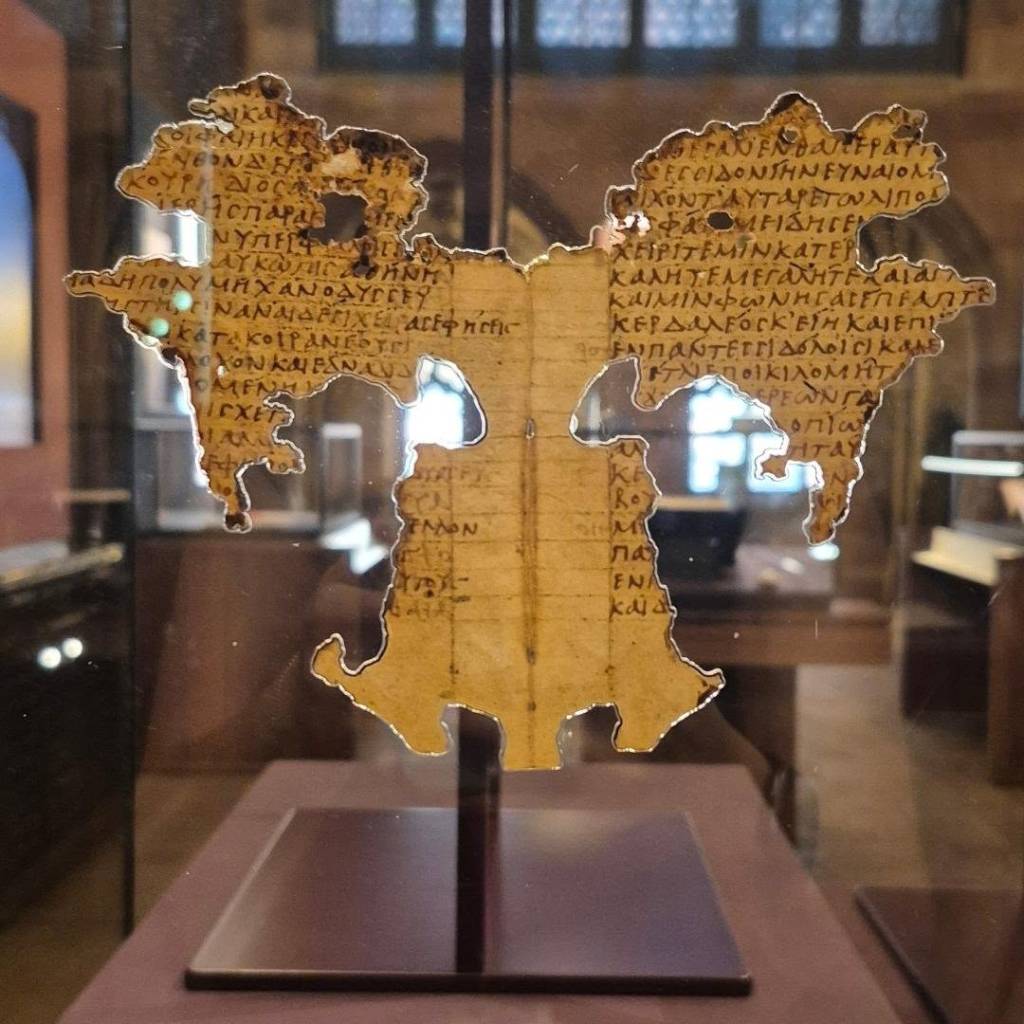
This unique manuscript represents a pivotal moment in human history: the transition from continuous scrolls to bound pages, known as a codex. This transition did not just change the physical format; it completely revolutionised how humans interacted with the written word.
Within these surviving pages lies a remarkably substantial portion of the original volume, specifically Books 12 to 15 and 18 to 24. These sections capture the narrative’s climax, preserving Odysseus’s dramatic return to Ithaca and his long-awaited reunion with his family.
The physical features of the codex tell their own story of use and devotion. Visible book numbers written by the original scribe helped early readers navigate this new, bound format, and the pages bear the physical signs of heavy use. A second ancient reader went through the text to correct mistakes, add missing lines, and insert reading marks. These detailed annotations provide clear proof that this copy was deeply loved and meticulously studied centuries ago.
Saving a scarred masterpiece
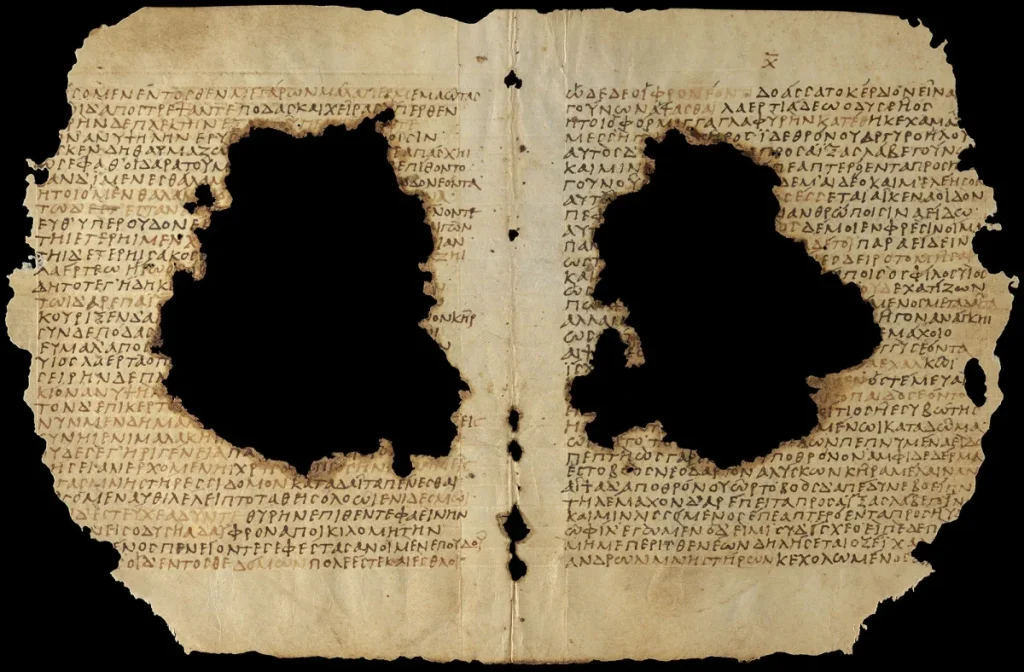
The manuscript’s journey to the modern world was nearly cut short by decay. When the artefact was acquired in 1900, its owner, Lord Balcarres (later the 26th Earl of Crawford), wrote a panicked note to his librarian, John Philip Edmond:
“The centre of the manuscript has nearly all rotted away, apparently from damp… It will be impossible to mount the sheets on parchment. The only alternative is placing each leaf between two sheets of glass—an expensive and cumbrous method.”
Thankfully, conservation has come a long way since 1900. Today, the John Rylands Collection Care team—partially funded by the National Manuscripts Conservation Trust (NMCT)—is pioneering new methods to stabilise, analyse, and re-house the codex.
The goal of this modern project is not to artificially “fix” or hide the damage. Instead, the team aims to protect and stabilise what remains, ensuring the manuscript’s long, scarred history of survival remains fully visible for future generations to study and admire.
Preserving the past
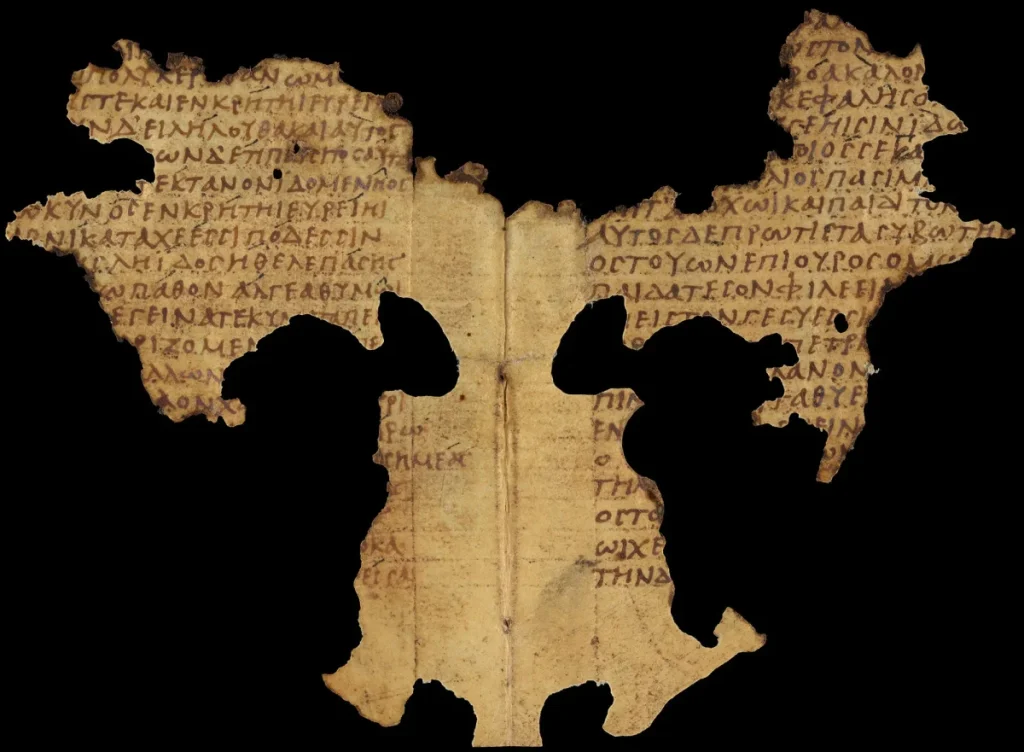
To protect this fragile treasure while keeping it accessible to the world, the project leverages state-of-the-art digital preservation tools. First, high-resolution digital imaging captures every letter, tear, and ancient repair. This creates an ultra-precise digital twin, allowing scholars to study the text in detail without handling the delicate original.
Additionally, the project utilises the Selene photometric stereo system in collaboration with the Factum Foundation. By photographing the pages under multiple controlled lighting angles, this system reveals microscopic variations in texture, ink depth, and parchment wear that are invisible to the naked eye.
These detailed scans are even being used to create tactile, 3D-printed copies of the pages, opening up entirely new ways for researchers and the public to physically interact with history. Through this perfect marriage of ancient craftsmanship and modern science, the story of the Odyssey—and the incredible book that carried it to us—will endure for generations to come.
See the Manchester Odyssey for yourself
You can see The Manchester Odyssey for free from today (Wednesday 15 July) at John Rylands Library, 150 Deansgate, Manchester M3 3EH.