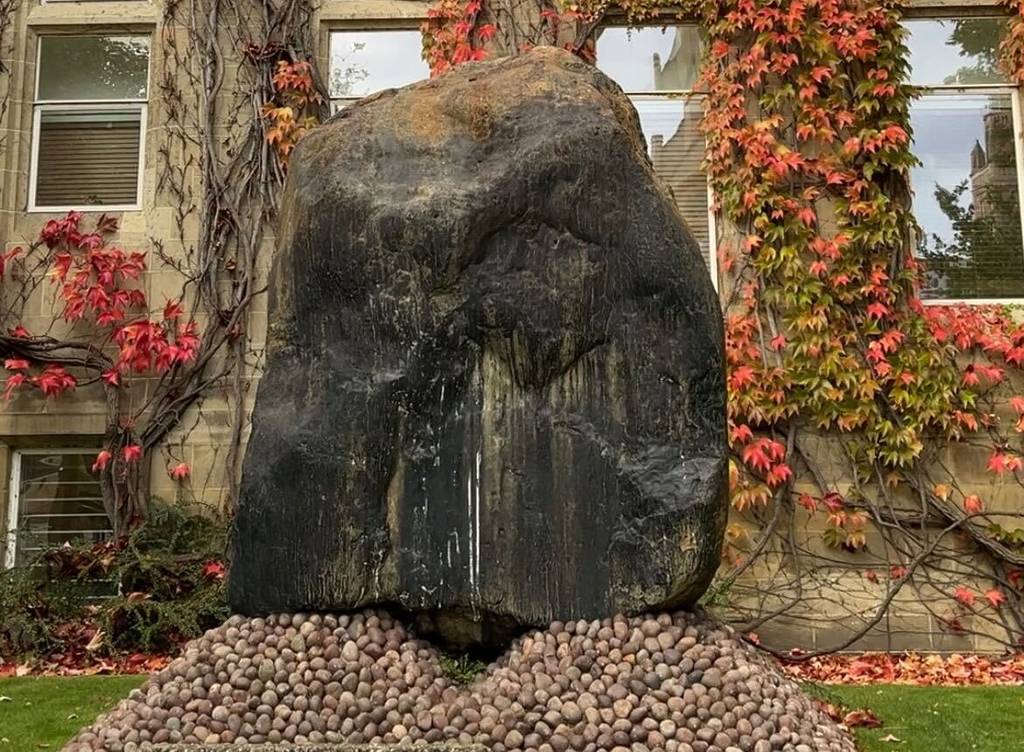
Tucked away in the heart of Manchester lies a relic that predates the city by thousands upon thousands of years. If you look closely, in a quiet courtyard steps away from the city centre bustle, you’ll find what at first seems like an ordinary lump of stone. But this is no random rock – it’s one of Manchester’s most unexpected treasures, carried here by glaciers during the last Ice Age.
A glacial traveller – the Ice Age Andesite Boulder
Known as the Ice Age Andesite Boulder, this ancient rock is thought to date back around 300 million years. However, the Ice Age Andesite Boulder didn’t form in Manchester, nor anywhere nearby.
Instead, geologists estimate that it originated in the Lake District, more than 100 miles away, before being dragged southwards during the retreat of the glaciers some 15,000 to 20,000 years ago. As the ice sheet melted, it deposited rocks like this one across the landscape, a phenomenon geologists call “glacial erratics.”
While many such stones have been lost, reused, or simply ignored, this boulder has remained remarkably intact, quietly surviving city expansion, industrialisation, and urban redevelopment all around it.
A survivor of the Ice Age in the heart of Manchester
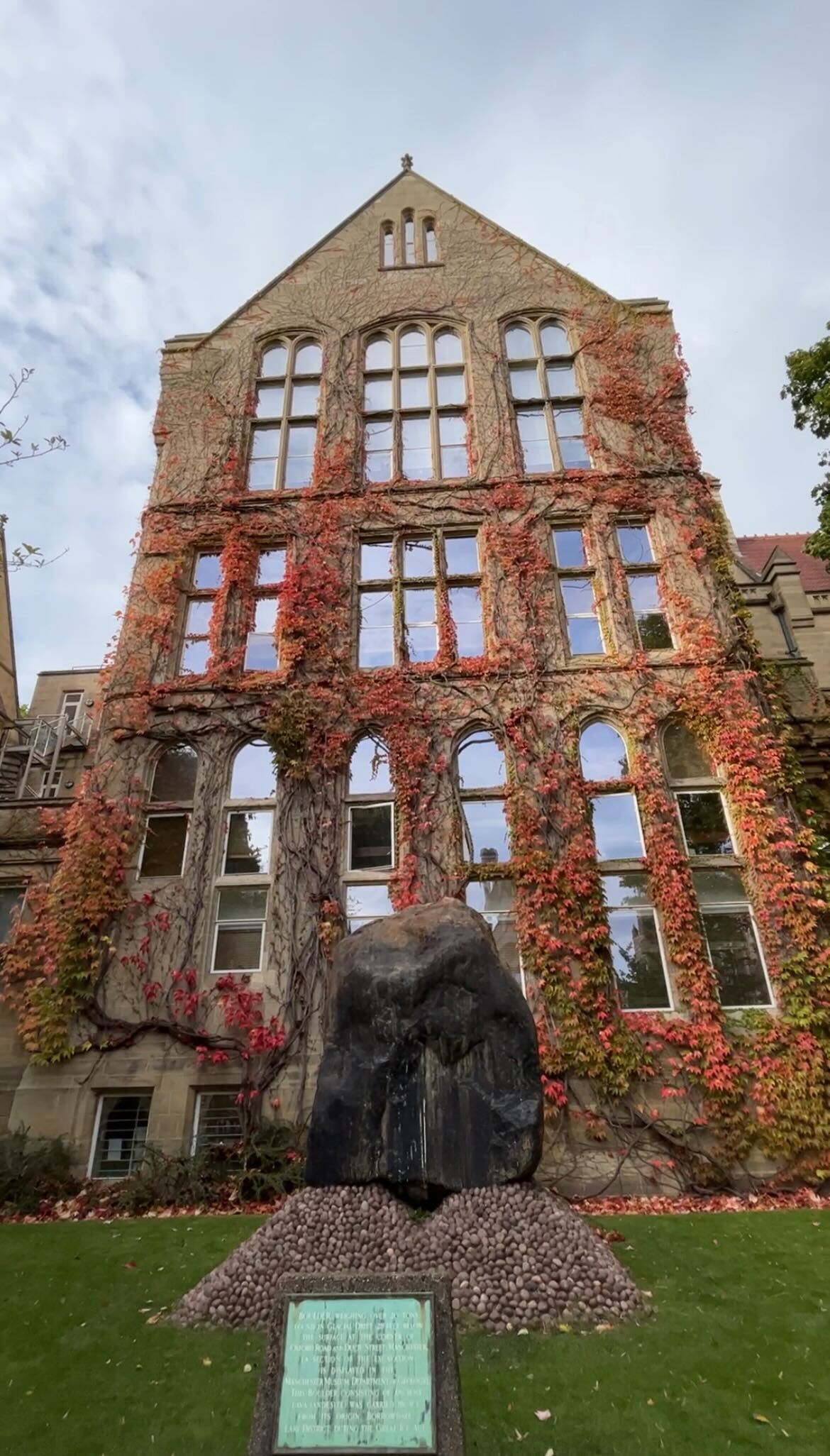
Today, you can find the Ice Age Boulder in the Old Quad at the University of Manchester, right by Manchester Museum. Located in front of the Quad’s grand ivy-covered Gothic architecture, the stone or (great lump of lava) beside it tells an unimaginably older story.
In fact, the Ice Age Andesite Boulder was rediscovered during 19th‑century building work on the Oxford Road corridor in Manchester. Instead of being broken up, it was preserved as a curiosity and a reminder of the forces that shaped the land long before Manchester ever existed.
Pause beside it, and it’s astonishing to think you’re touching something carried here by the colossal power of glaciers, surviving in a city more famous for cotton, canals, and football than Ice Age geology.
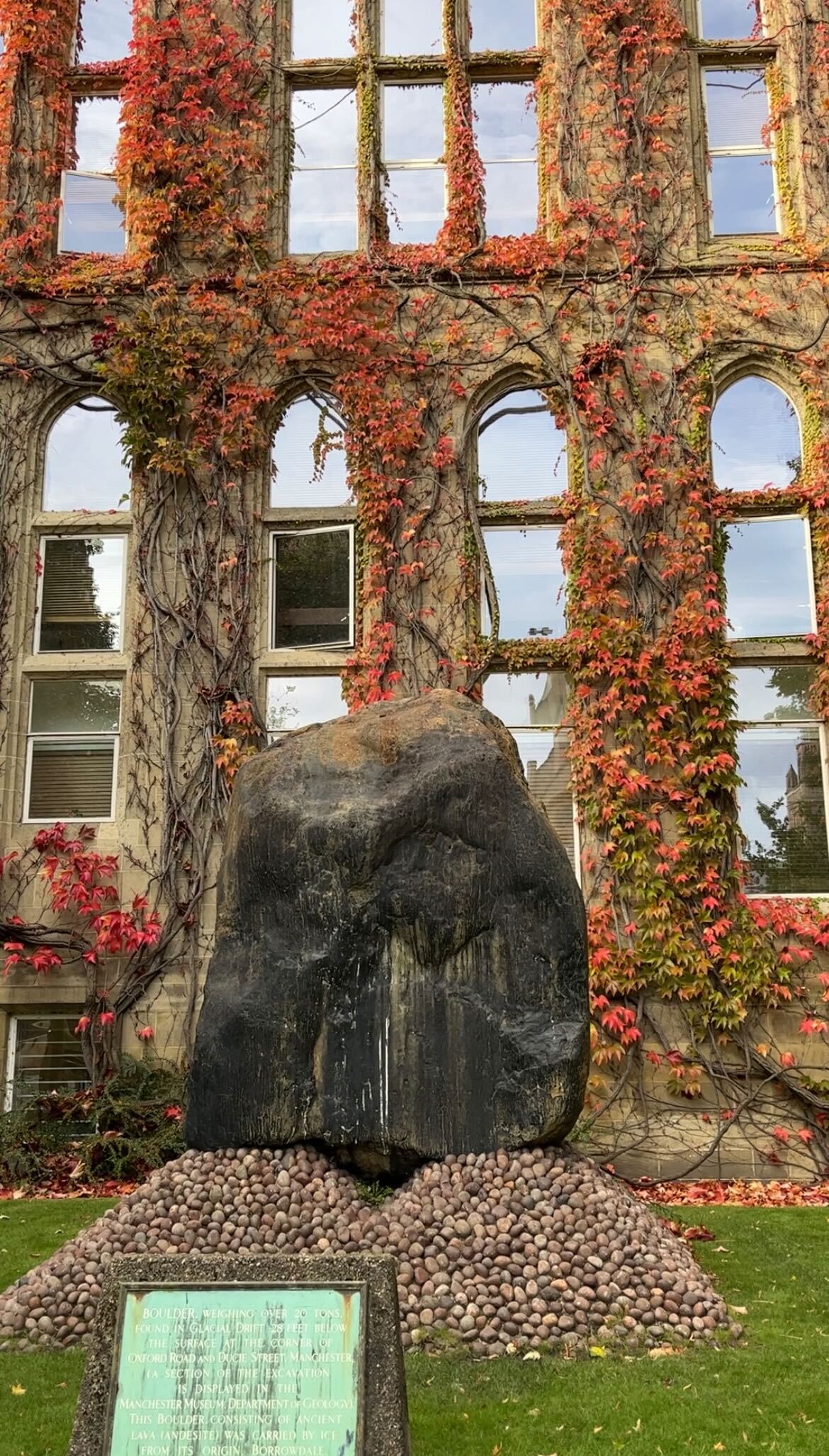
For geologists, rocks like this are key to piecing together Britain’s glacial history, showing how landscapes were shaped by ice sheets and how materials were transported across enormous distances.
For Manchester residents and curious visitors, it’s a reminder that beneath the skyscrapers and Victorian brickwork lies a landscape shaped by natural forces that dwarf human history.
It also adds to the rich patchwork of stories found in small corners of the city, proof that Manchester isn’t only about industry and music, but also about deep time and the natural history written into its streets.
Visiting the Ice Age Andesite Boulder in Manchester
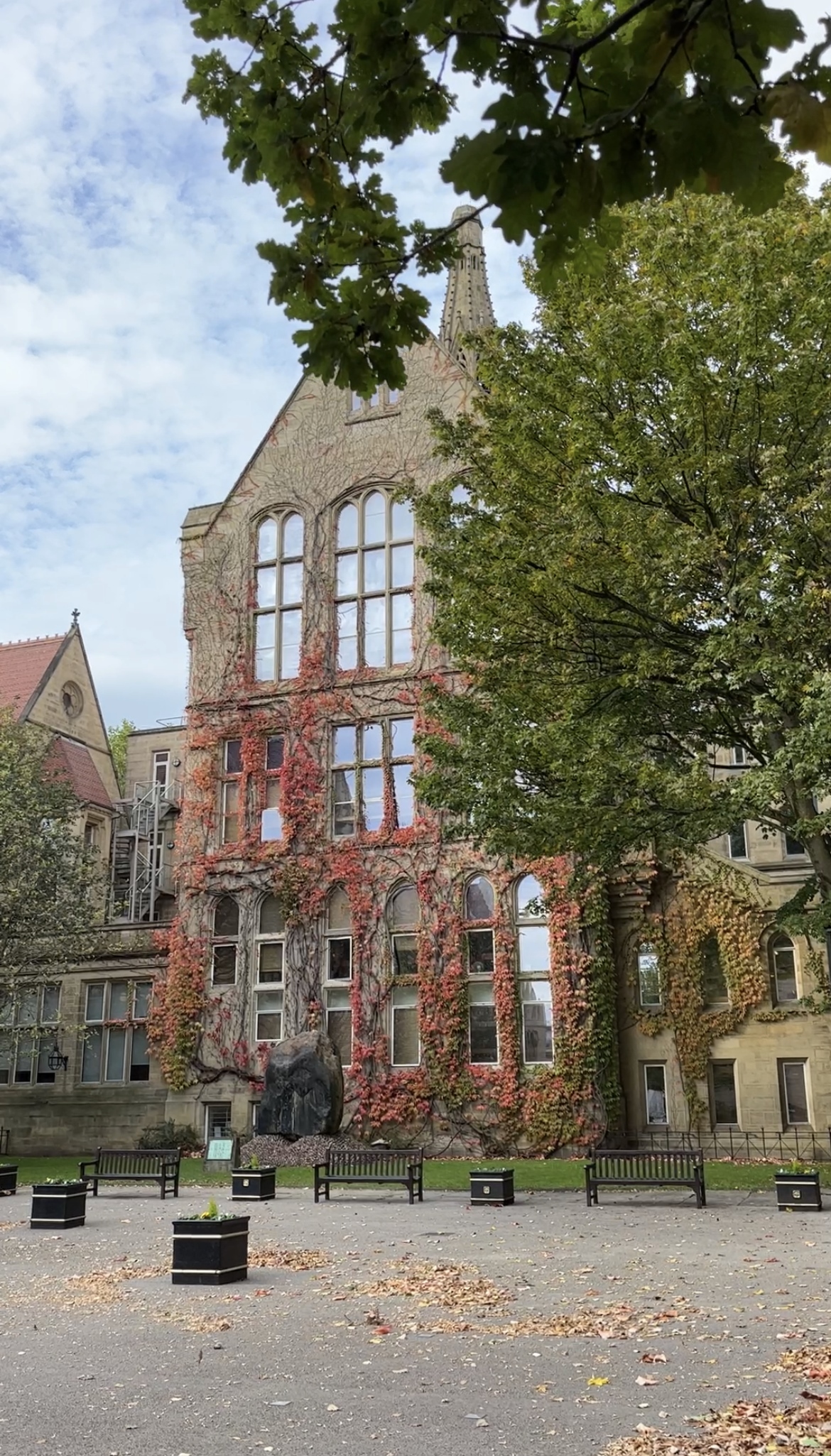
If you want to see this rare relic for yourself, head to Oxford Road and simply walk under the main arch of the Whitworth Building, and you’ll find it in front of the Beyer Laboratories Building. The quad is free to visit, and many visitors walk straight past without realising they’re brushing shoulders with a survivor from the Ice Age.
So next time you’re wandering Manchester’s city centre, take a moment to stop by. That rough-looking block is not just another stone; it’s a piece of the Ice Age, resting quietly in the middle of modern Manchester.