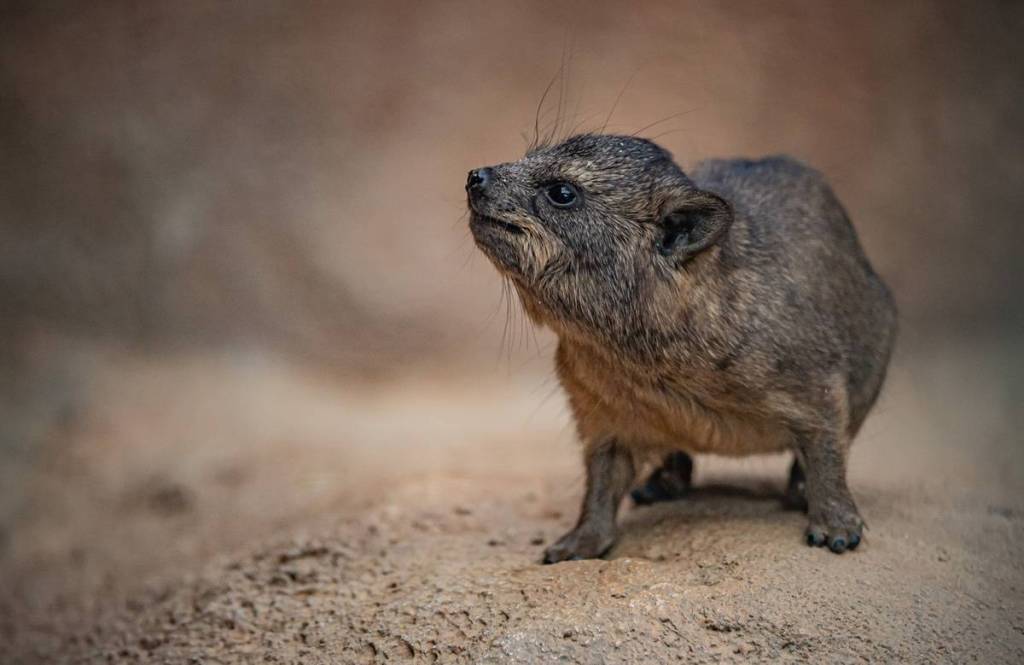

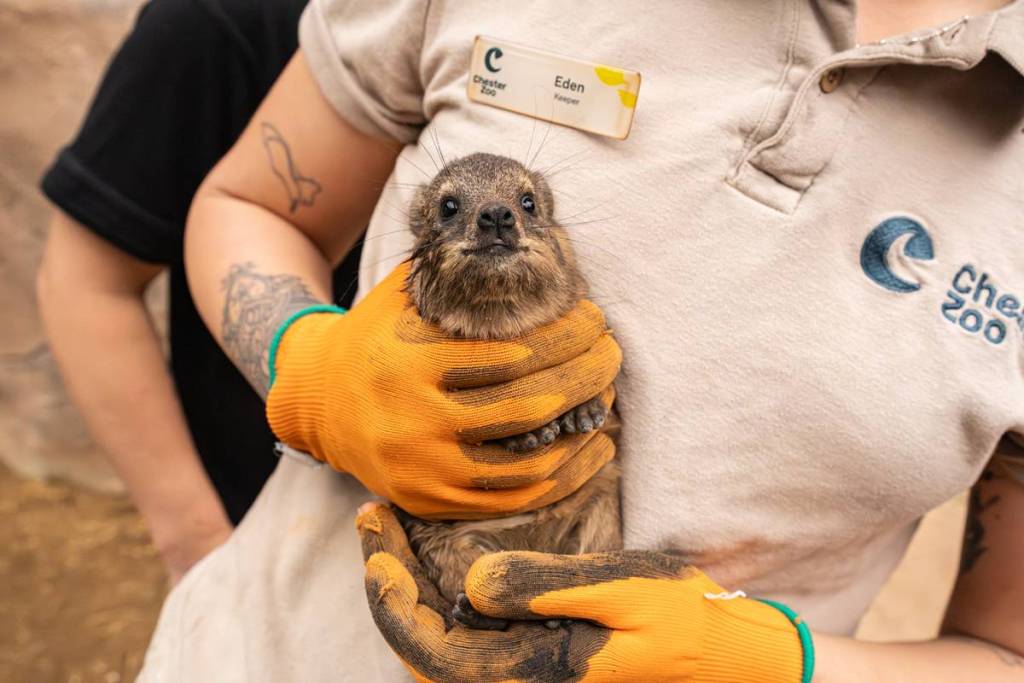
Three rock hyrax pups have been born at Chester Zoo – tiny, potato-shaped animals with a surprising connection to one of the biggest animals on the planet. Born to parents Maris and Albert in late summer, the three pups have just passed their first vet check with a clean bill of health. The litter includes two boys and one girl, and the pups have been named Russ, Spud and Jackie.
They now weigh roughly 350g and are currently a fraction of the size of the adults, which can weigh up to 4kg. Yet despite their small stature, they have an unlikely relative. Rock hyraxes, despite being known as ‘rock rabbits’ or ‘rock badgers’, are part of the same evolutionary group as elephants, as well as sirenians – the family of aquatic mammals that includes dugongs and manatees.
Megan Carpenter, keeper at Chester Zoo, said: “People are always surprised when we tell them that hyraxes are closely related to elephants.
“They look completely different, but there are some clues to their unusual family history. Their long front teeth, for example, are a little bit like miniature elephant tusks, and their feet have some resemblance to elephant feet, with flattened hoof-like nails.
“It’s incredible to look at one of these tiny pups, weighing about the same as a jacket potato, and know that somewhere in its family tree is an elephant.”
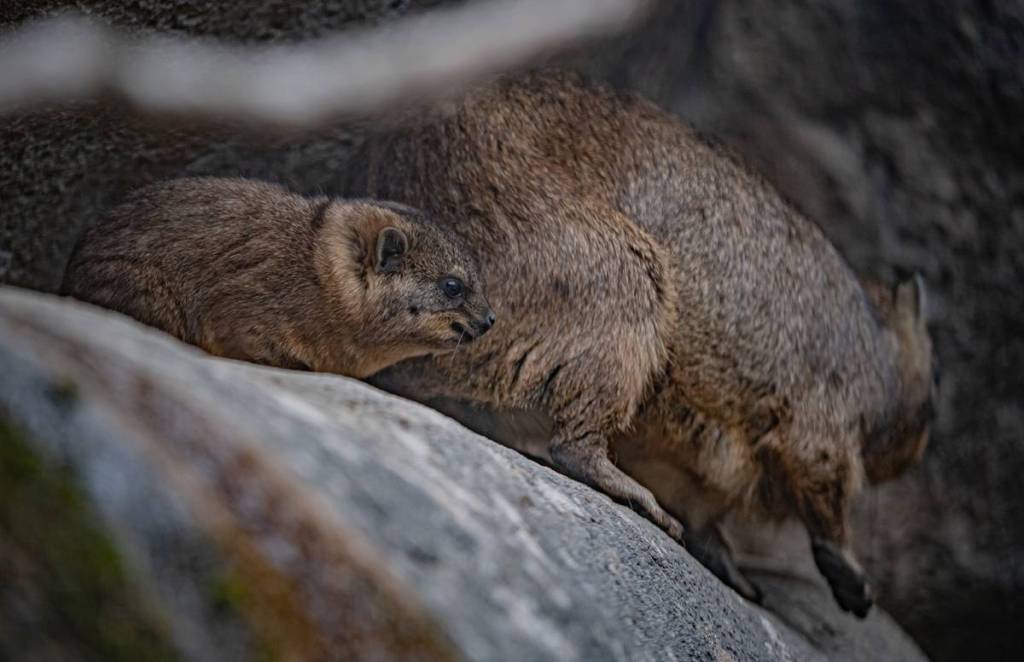
Hyraxes are found across sub-Saharan Africa and the Middle East, where they live among rocky landscapes and are most active in daylight. The unexpected relationship between hyraxes, elephants and dugongs offers a fascinating introduction to taxonomy – the science of how species are related and classified.
Lyndon Howson, assistant team manager in visitor engagement at the zoo, said: “It’s incredible to think these little animals are so closely related to elephants and manatees. They’re a brilliant example of how misleading appearances can be when it comes to evolution.
“That’s what makes species like hyraxes so interesting – they challenge what we think we know about the natural world and show just how surprising animal evolution can be.”