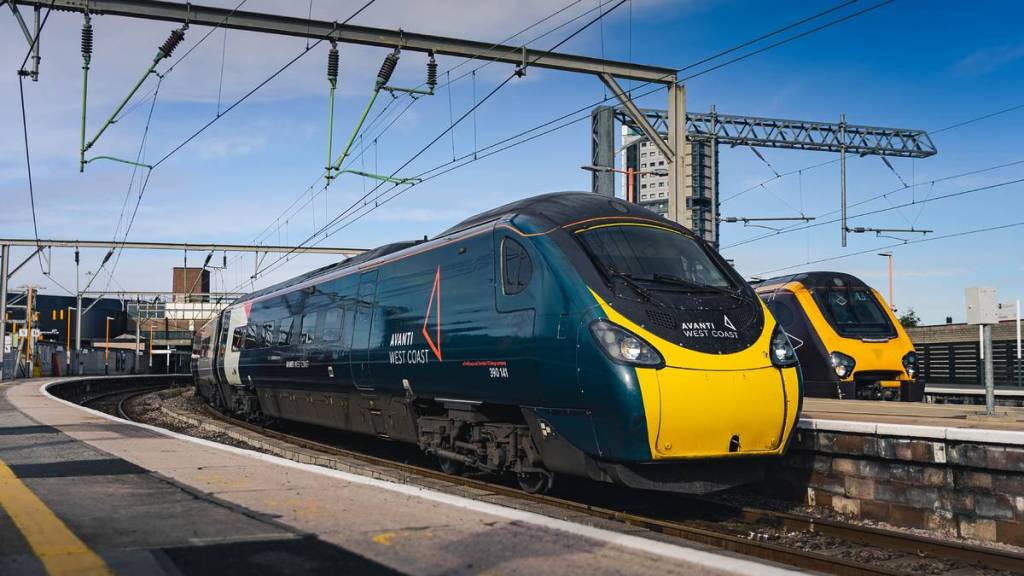

The UK government will bring Avanti West Coast into public ownership from 7 March 2027, ending its private contract early and placing the struggling intercity operator under state control as part of Labour’s wider rail renationalisation programme.
UK government will bring Avanti West Coast into public ownership from 2027
Avanti West Coast, which runs services between London Euston and the likes of Birmingham, Manchester, Liverpool, Glasgow and Edinburgh, will transition to public ownership when its current Department for Transport (DfT) contract ends on 7 March 2027.
Transport Secretary Heidi Alexander said the move comes after years of “underperformance” with passengers “paying the price”, while Prime Minister Andy Burnham framed it as putting “passengers, not shareholders” first.
The government says renationalisation will be paired with a dedicated improvement plan focused on infrastructure, reliability and passenger experience, with every pound previously paid as private fees redirected to service improvements.
Why Avanti is being taken back into public hands
Avanti has become one of the worst-performing major operators on the network, with high levels of delays and cancellations drawing repeated political and regulatory criticism.
Reports highlight that Avanti has had the highest number of cancellations across the national network, with chronic reliability problems on the West Coast Main Line.
The Labour government has been progressively bringing train operators into public ownership as contracts expire, ahead of Great British Railways (GBR) assuming full oversight of the system from 2027.
Ministers argue that private management has failed to deliver the required investment and operational discipline, and that public control will allow faster, passenger-focused decision-making.
Who currently runs Avanti – and what changes?
Avanti West Coast is operated by First Trenitalia West Coast Rail Limited, a joint venture between FirstGroup (70%) and Italy’s state-owned Trenitalia (30%).
The franchise was awarded in 2023 with a contract potentially running to 2032, but the government is using a termination clause to end it on 7 March 2027.
From that date, services will be run directly under public control, aligned with the broader shift to GBR branding and governance.
After Avanti, only East Midlands Railway and CrossCountry will remain as the main DfT-contracted operators not yet nationalised, according to recent reporting.
What passengers might see next
Officials have tied the renationalisation to a package of practical improvements rather than an immediate overhaul of routes or fares.
Key pledges include:
- Infrastructure investment to address the root causes of delay on the West Coast Main Line.
- Work to cut cancellations and improve timetable reliability.
- A stated aim to run services “in the interests of passengers, not private sector shareholders”, with fees previously paid to the private operator reinvested in the railway.
In practice, day-to-day services are likely to continue much as now in the short term, with branding and management gradually shifting under the GBR umbrella as the wider reform programme rolls out.
Avanti is the latest and one of the most high-profile steps in Labour’s plan to return most passenger rail services to public ownership ahead of GBR taking full control.