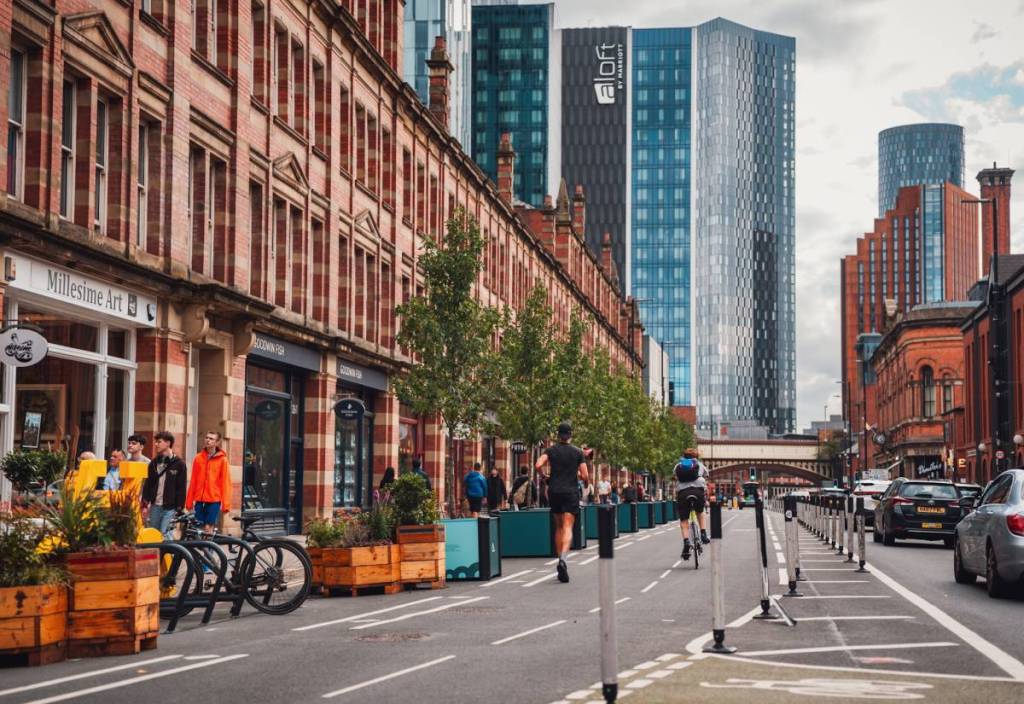

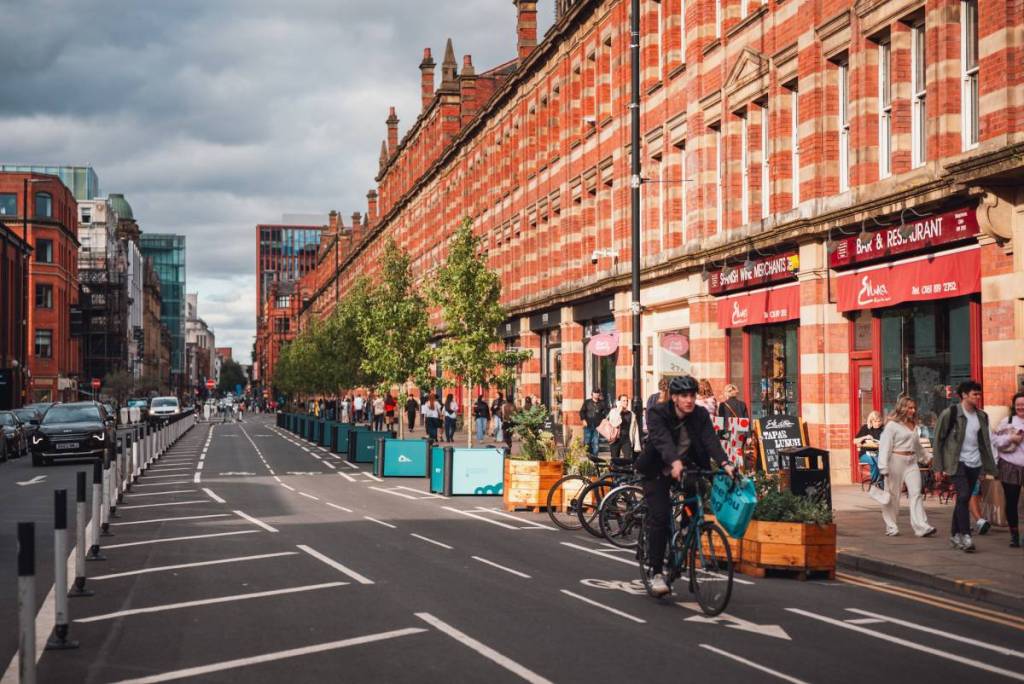
A 90-metre stretch of Manchester’s Deansgate outside the Great Northern has been temporarily transformed with 12 sweet gum trees, hexagonal beehive-inspired planters made from recycled velodrome track, and two vibrant bike ports. Installed by CyanLines alongside Manchester City Council, City of Trees, City Co, and Great Northern, the project showcases how green elements can improve public spaces and aims to inspire further urban greening initiatives.
“It’s a welcome addition to one of the main roads in the city”
Councillor Garry Bridges, leader, Manchester City Council said: “The city is on a mission to create more green spaces, plant more trees and encourage wildlife into the city. While this may be a temporary installation, it’s a welcome addition to one of the main roads in the city and we hope our residents, visitors and business owners will see the huge benefits trees and plants can bring to our streets. The addition of the brightly coloured cycle ports will provide much needed cycle parking to the area as more people experience the city on two wheels than ever before.
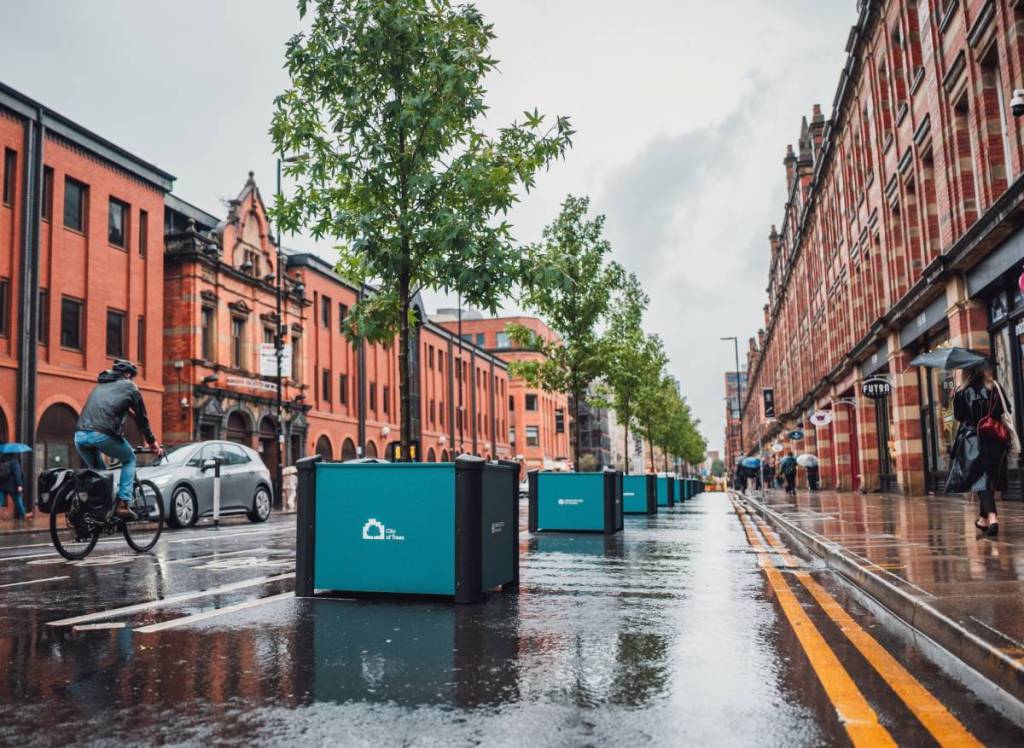
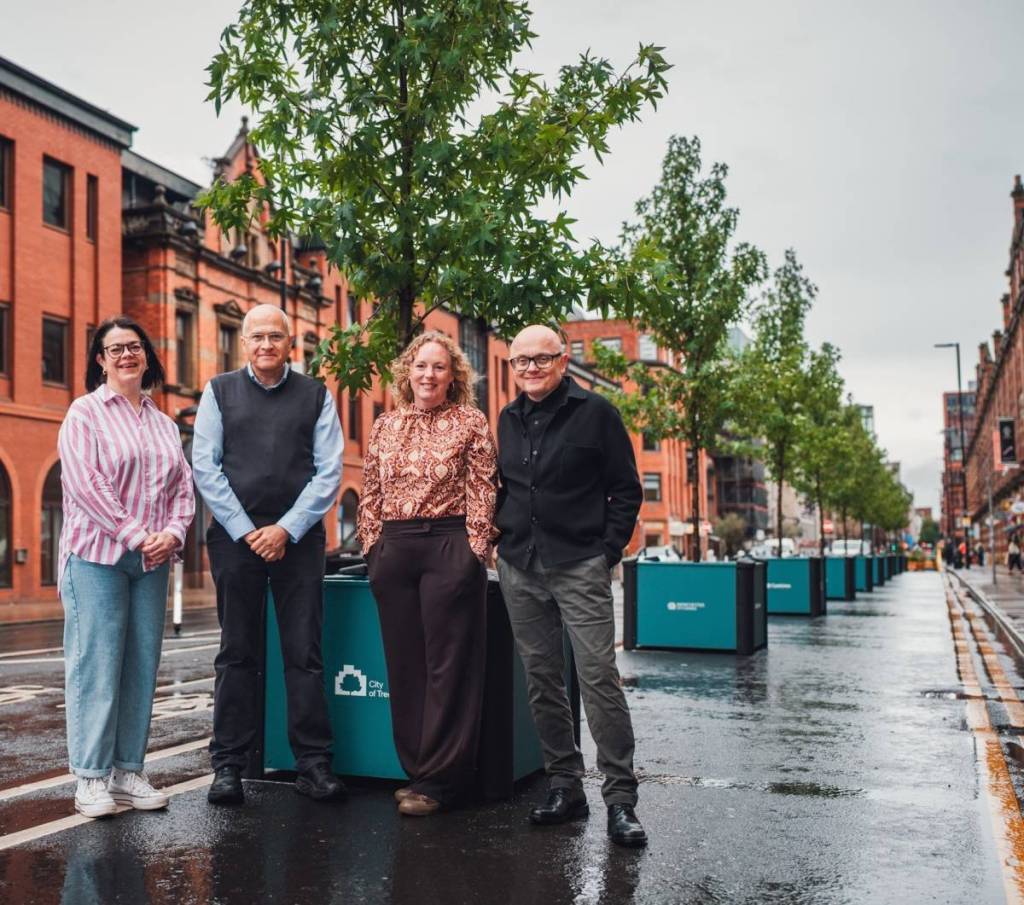
“The tree-lined section is just the start and we’ll continue to work with local residents and businesses on Deansgate, the CyanLines team and City of Trees to develop new ideas to let nature thrive and for people to enjoy.”
Steve Connor, interim programme director, CyanLines said: “We are thrilled our first pop-up project is taking place on Deansgate, just a stone’s throw from the CyanLines route, CL4. This is about delivering a more connected, greener, healthier and more climate-resilient city for the future and we hope our trees, planters and cycle posts spark imaginations, conversations and ideas.”
How long will the trees be on Deansgate for?
The sweet gum trees will be on Deansgate in planters; however, they will be planted into forever homes around Greater Manchester when the project ends in 12 months’ time. The trees have been chosen because they thrive in the varied weather conditions experienced in Manchester and in the autumn their dark green leaves turn into striking red and gold autumn colours.
Beth Kelsall, Urban Forestry Manager from City of Trees, said: “Bringing sweet gum trees on to Deansgate will really bring to life the many benefits street trees bring. The reason the trees are only in place for a limited time is we don’t like to leave them in temporary planters for too long as with all trees, they thrive much more when planted in the ground.”
How does Greater Manchester’s 11.3 million trees benefit the region?
Beyond their aesthetic value, trees provide crucial environmental, health, and economic benefits across Greater Manchester. Key findings from the City of Trees i-Tree Eco Survey reveal the powerful benefits of the region’s 11.3 million trees:
- Climate Control: Lower surface temperatures by 2°C–8°C, store 1.57M tonnes of carbon, and produce 122,450 tonnes of oxygen annually.
- Pollution & Water Management: Filter 847 tonnes of air pollution yearly and absorb 1.64M m³ of stormwater (equivalent to 657+ Olympic pools).
- Health & Wildlife: Improve mental health, lower blood pressure, promote active travel, and support local biodiversity.
- Economic Value: Increase high-street dwell time and boost local business traffic through the urban “linger effect.”
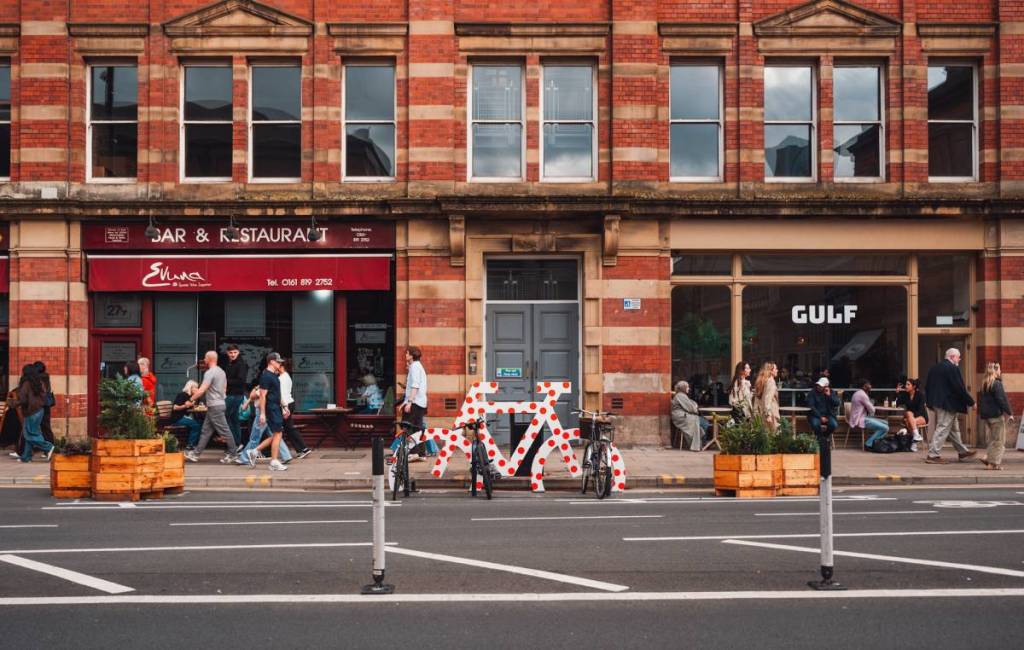
Deansgate’s transformation also features bike ports and eco-friendly beehive planters
To support the thriving Deansgate cycleway—which logged over 1.16 million journeys in the past year alone—two vibrant bike ports and a set of eco-friendly beehive planters have arrived on the street.
- Supporting Cyclists: The cycleway offers a protected 4-mile route running from Blackfriars through to Chester Road and the Chorlton Cycleway. The new bike ports hold up to 16 bikes and showcase Tour de France yellow and polka dots to celebrate the Tour de France Femmes stage finish coming to Deansgate next year.
- Upcycled Design: Built by Touch Wood, a Greater Manchester social enterprise that creates local job opportunities through timber recovery, the planters incorporate repurposed wood from the Manchester Cycling Centre’s Velodrome track. Using reclaimed wood saved 1 tonne of CO2.
- Urban-Ready Planting: A robust mix of evergreens, hostas, lavender, juniper, thyme, sedums, and cabbage palms was specially chosen to withstand busy city conditions while bringing fresh colour and natural texture to the street.