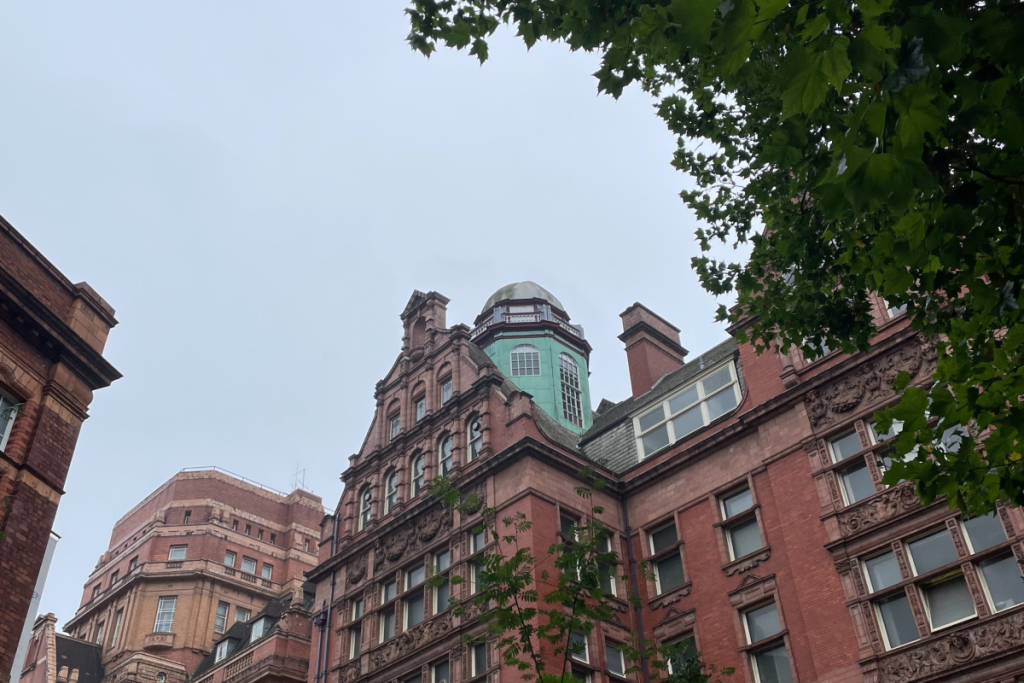

When considering stargazing in Manchester, many locals might not immediately think of the city centre. However, the urban skyline hides a rich century-old astronomical tradition, with the Godlee Observatory standing as its finest testament. Perched quietly above the city streets, this remarkable structure features a distinctive white domed roof that pokes out from the rooftop.
The Manchester Astronomical Society manages the station, which forms part of the University of Manchester’s Sackville Street Building. Although it does not compare in size to the massive Lovell telescope at Jodrell Bank in Cheshire, the facility houses both a Newtonian telescope and a refracting telescope. To reach these historic instruments, astronomers head up an Edwardian spiral staircase before climbing through a trap door.

A historic donation and a crucial telegram to NASA
Local businessman and philanthropist Francis Godlee donated the landmark to the University of Manchester back in 1902. Situated atop a Gothic, red-brick building opposite Sackville Gardens in the city’s Gay Village, the compact station quickly built an incredible astronomical legacy.
Despite its modest size, the facility played a notable supporting role during the 1969 American moon landing. As Apollo 11 prepared to land, members of the Manchester Astronomical Society carefully monitored the lunar surface and spotted a potentially dangerous crater gleaming with unusual brightness. Consequently, the team sent an urgent telegram to NASA, who forwarded the alert to the Apollo 11 crew, allowing the astronauts to confirm the phenomenon themselves.
Beyond observing lunar features, astronomers can use the telescopes to peer much further into outer space. Indeed, the equipment allows observers to view every planet in our Solar System, including Pluto, regardless of whether you classify it as a planet or dwarf planet.

From WWII to the elements: how Godlee Observatory survived the test of time
What truly distinguishes this stargazing spot from other observatories is its extraordinary building material. Craftsmen constructed the facility primarily from wood and fashioning the dome ceiling panels entirely out of papier-mâché.
Furthermore, this humble construction has endured far more than just Manchester’s wet climate and periods of neglect. During World War II, the rooftop structure miraculously survived the German Blitz, even while nearby buildings suffered heavy damage or destruction. Consequently, the observatory stands as a testament to true Northern grit.
Unfortunately, the facility remains temporarily closed to the public at present. Visitors hoping to view the building from the outside can find it at the Sackville Street Building, The University of Manchester, 60 Sackville Street, Manchester, M1 3WE.